How to Build Bigger Shoulders
Complete guide to building impressive deltoids. Learn the best exercises for each delt head, optimal volume, and a sample shoulder workout.
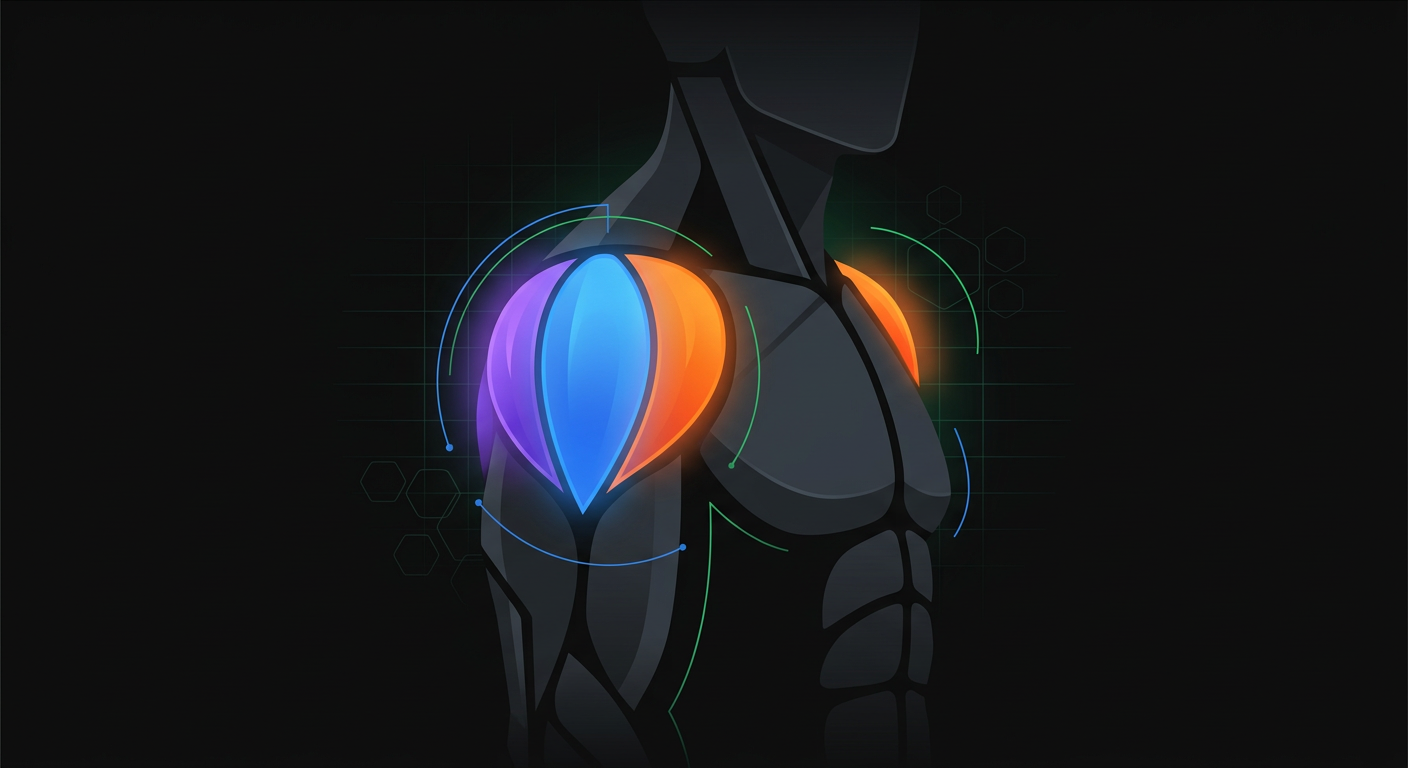
Well-developed shoulders create the V-taper that defines an athletic physique. Here's how to train all three deltoid heads for balanced, impressive shoulder development.
Understanding the Deltoids
The deltoid has three distinct heads, each requiring different exercises:
Anterior (Front) Deltoid
- Function: Shoulder flexion, internal rotation
- Most active in: Pressing movements
- Common issue: Often overdeveloped from bench press
Lateral (Side) Deltoid
- Function: Shoulder abduction
- Most active in: Lateral raises
- Key for: Shoulder width and roundness
Posterior (Rear) Deltoid
- Function: Shoulder extension, external rotation
- Most active in: Pulling and fly movements
- Common issue: Underdeveloped in most lifters
Best Exercises by Delt Head
Anterior Deltoid Exercises
1. Overhead Press (Standing or Seated)
The king of shoulder exercises. Saeterbakken et al. (2013) found that standing presses produced greater deltoid activation than seated variations, though seated allows heavier loads.
- Barbell or dumbbells both work
- Full range of motion from clavicle to lockout
- 3-4 sets of 6-10 reps
2. Incline Dumbbell Press
Inclines above 45° shift emphasis from chest to anterior delts. Already in most programs via bench work.
Lateral Deltoid Exercises
1. Dumbbell Lateral Raises
Campos et al. (2020) found that lateral raises produced the highest lateral deltoid EMG activity among the exercises tested, making them essential for shoulder width.
Form tips:
- Slight forward lean
- Lead with elbows, not hands
- Control the negative
- Stop at shoulder height
2. Cable Lateral Raises
Constant tension throughout range of motion. Can be done one arm at a time for better focus.
3. Machine Lateral Raises
Great for isolating when form fatigue sets in with free weights.
Posterior Deltoid Exercises
1. Face Pulls
Essential for shoulder health and rear delt development. Use a rope attachment, pull to face level, and squeeze at peak contraction.
Balanced posterior delt training is widely recommended for shoulder health and injury prevention.
2. Reverse Pec Deck
Machine stability allows full focus on the rear delt squeeze.
3. Bent-Over Rear Delt Flys
Dumbbells or cables. Keep a flat back, slight elbow bend, focus on leading with elbows.
Volume and Frequency Recommendations
Weekly Volume
Based on current research and practical experience:
| Delt Head | Sets/Week | Notes |
|---|---|---|
| Anterior | 0-6 | Often gets enough from pressing |
| Lateral | 10-20 | Primary focus for most |
| Posterior | 8-15 | Often needs extra work |
Total shoulder-specific volume: 15-25 direct sets per week.
Training Frequency
2-3x per week for lateral and rear delts
Spreading your shoulder volume across 2–3 weekly sessions, as covered in our MEV, MAV, and MRV explainer, generally produces better results than one marathon shoulder day.
Sample Weekly Distribution
- Push Day: OHP + lateral raises
- Pull Day: Face pulls + rear delt flys
- Shoulder Day: All three heads
Sample Shoulder Workout
Push Day Shoulder Work
- Overhead Press — 4×6-8
- Dumbbell Lateral Raises — 4×12-15
Pull Day Shoulder Work
- Face Pulls — 3×15-20
- Reverse Pec Deck — 3×12-15
Dedicated Shoulder Session
- Seated Dumbbell Press — 4×8-10
- Cable Lateral Raises — 4×12-15
- Machine Lateral Raises — 3×15-20
- Bent-Over Rear Delt Flys — 4×12-15
- Face Pulls — 3×15-20
Progressive Overload for Shoulders
Shoulders respond well to varied rep ranges:
- Presses: Progressive overload in 6-10 rep range
- Lateral raises: Focus on form; add weight slowly (5 lb jumps)
- Rear delt work: Chase the pump; high reps (15-20) work well
Use autoregulation — stop 1-2 reps from failure on most sets. Save failure for occasional intensity techniques.
Common Shoulder Training Mistakes
1. Neglecting Rear Delts
Most lifters do plenty of pressing but minimal rear delt work. This creates muscular imbalance and increases injury risk.
2. Going Too Heavy on Lateral Raises
Ego lifting lateral raises with body English doesn't build side delts. Lighten the weight, slow down, feel the muscle work.
3. Only Training Heavy
Shoulders respond well to higher reps. Don't skip the 12-20 rep work, especially for lateral and rear delts.
4. Ignoring Pressing Variations
Some people's shoulders don't tolerate barbell pressing. Dumbbells, landmine presses, and machine presses are all valid options.
How Iridium Helps
Iridium tracks your shoulder volume automatically, showing you whether you're hitting the optimal range for growth. The AI considers your pressing volume when programming lateral and rear delt accessories.
The app also suggests exercise variations based on your equipment and helps you progress appropriately across different rep ranges.
Key Takeaways
- Train all three heads — especially lateral and rear delts
- Lateral raises are essential — presses alone won't build width
- 10-20 sets weekly for side delts, 8-15 for rear delts
- Higher frequency works — 2-3x per week beats one marathon session
- Form over weight — especially on isolation movements
Big shoulders take time. Consistent training with proper technique and adequate volume will get you there.
Ready to build bigger shoulders? Download Iridium for AI-powered shoulder programming that tracks volume by muscle group.