Kettlebell Row
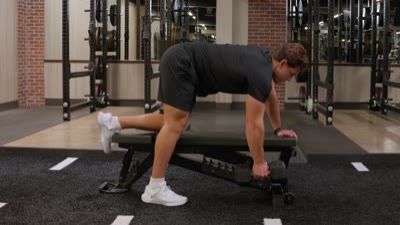
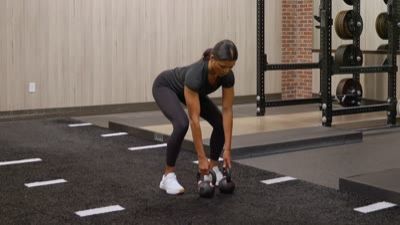
A unilateral compound exercise that targets the upper back and lats while building core stability through a bent-over hip hinge position.

Since this unsupported variation requires core stability, Iridium checks your 7-day workout history to ensure your spinal erectors are recovered enough to handle the load safely. The system tracks this volume against your weekly limits for lats and rhomboids, using your RPE scores to determine when to increase weight or reps for progressive overload.
Form Cues
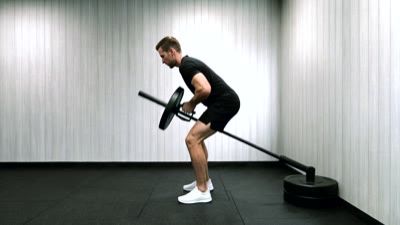
- Hinge at your hips until your torso is nearly parallel to the floor
- Brace your core tightly to resist twisting your torso
- Pull the kettlebell handle toward your back pocket
- Squeeze your shoulder blade toward your spine at the top
- Control the weight slowly on the way down
- Don't round your lower back at any point
- Don't rotate your torso to help lift the weight
- Don't shrug your shoulders up toward your ears
- Don't jerk the weight up using momentum
- Don't let the kettlebell drift forward away from your center of gravity
Common Mistakes
- Rounding the spine due to lack of core engagement
- Pulling with the biceps rather than the back muscles
- excessive torso rotation to cheat the rep
- Flaring the elbow out too wide
- Standing too upright, reducing range of motion
Muscles Worked
This exercise primarily strengthens the latissimus dorsi and rhomboids, developing back width and thickness. It secondarily targets the biceps and grip strength, while the spinal erectors and obliques work isometrically to maintain a neutral spine and resist rotation.
Primary
Secondary


Get Personalized Coaching for Kettlebell Row
Don't guess your way through weights or workouts. Download Iridium for automatic, AI-powered coaching that adapts to your recovery and goals.