Prone T's
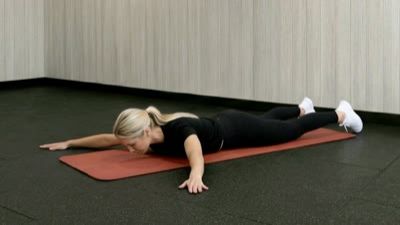
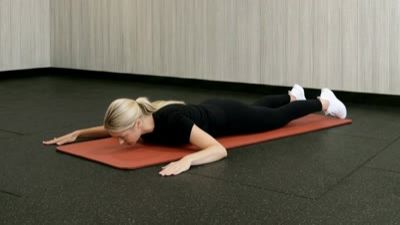
Prone T's are a shoulder health exercise performed lying face-down with arms extended to the sides to strengthen the upper back. This movement specifically targets the middle trapezius and rhomboids to improve posture and scapular stability.
Iridium treats Prone T's as a low-impact accessory that contributes to volume goals for the middle trapezius and rhomboids without significantly affecting your systemic recovery score. Since maximal strength is not the primary objective here, the algorithm deprioritizes 1RM estimation and focuses on RPE consistency to ensure quality movement at higher rep ranges. This allows the AI to program necessary mid-back volume even when your primary pulling muscles are fatigued from heavier compound lifts.
Form Cues
- Lie flat on your stomach with arms extended straight out to form a 'T'.
- Engage your glutes and core to stabilize your torso.
- Initiate the movement by squeezing your shoulder blades together.
- Keep your chin tucked and eyes facing the floor.
- Pause briefly at the top of the movement to maximize contraction.
- Don't shrug your shoulders up toward your ears.
- Don't arch your lower back to lift your arms higher.
- Don't jut your chin forward or look up.
- Don't use momentum to swing your arms upward.
- Don't bend your elbows significantly; keep arms relatively straight.
Common Mistakes
- Shrugging into the upper traps
- Hyperextending the lumbar spine
- Straining the neck forward
- Relying on momentum
- Bending elbows to shorten the lever
Muscles Worked
This exercise primarily isolates the middle trapezius, rhomboids, and posterior deltoids, which are essential for scapular retraction and counteracting rounded shoulders. It also engages the erector spinae and lower trapezius isometrically to maintain a neutral spinal position during the hold.
Primary
Secondary

Get Personalized Coaching for Prone T's
Don't guess your way through weights or workouts. Download Iridium for automatic, AI-powered coaching that adapts to your recovery and goals.