Bench Press (Close Grip)
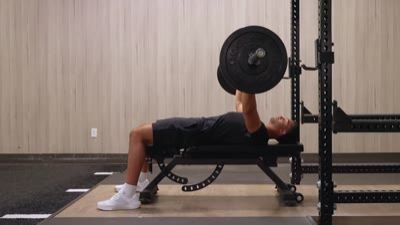
The Close Grip Bench Press is a compound upper-body exercise that modifies the standard bench press to prioritize triceps strength and mass. By placing hands shoulder-width apart, you shift the mechanical load from the chest to the triceps while maintaining shoulder stability.
Iridium monitors the fatigue status of your middle chest before prescribing this exercise to ensure your pectorals can support the load while keeping the triceps as the primary mover. Since this is a compound lift capable of heavy loading, the AI tracks 1RM estimates and applies progressive overload logic distinct from lighter isolation movements to drive strength gains.
Form Cues
- Grip the bar exactly shoulder-width apart to stack joints vertically
- Tuck your elbows tight to your ribcage during the descent
- Lower the bar controlled toward your lower chest or upper abs
- Drive the bar back up by forcefully extending your elbows
- Don't place hands so close that they touch each other
- Don't flare your elbows out to the sides
- Don't bounce the bar off your ribcage
- Don't bend your wrists backward excessively
Common Mistakes
- Gripping excessively narrow
- Flaring elbows outward
- Lifting hips off the bench
- Bouncing the bar off the chest
- Unstable wrist position
Muscles Worked
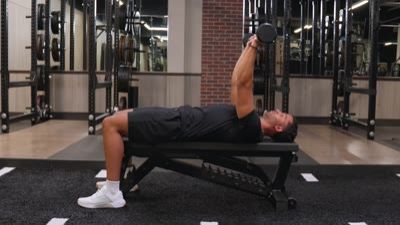
This movement is the premier compound lift for mass-building in the triceps, specifically targeting the lateral and medial heads due to the extensive range of motion and heavy loading potential. While it still recruits the anterior deltoids and inner pectoral fibers for stability, the biomechanics force the triceps to perform the majority of the extension work.
Primary
Secondary


Get Personalized Coaching for Bench Press (Close Grip)
Don't guess your way through weights or workouts. Download Iridium for automatic, AI-powered coaching that adapts to your recovery and goals.