Elevated Platform Deadlift
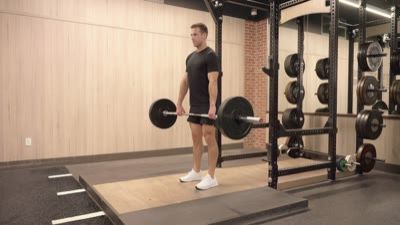
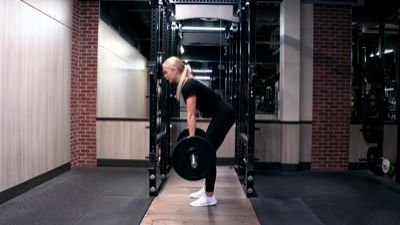
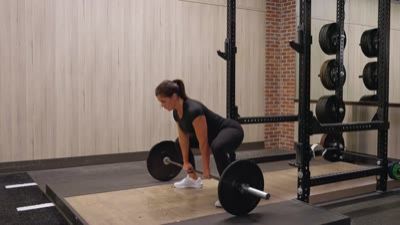
The Elevated Platform Deadlift, also known as a Deficit Deadlift, is an advanced strength exercise where you stand on a raised surface to increase the range of motion. This variation targets the posterior chain and improves strength off the floor by forcing deeper hip flexion and greater leg drive.
Since the increased range of motion generates high systemic fatigue, Iridium checks your sleep data and 7-day workout history to ensure you have the recovery capacity for this specific lift. The system tracks your 1RM and RPE separately from your standard deadlift to calculate accurate load targets that account for the mechanical disadvantage of the deficit.
Form Cues
- Stand securely on a stable platform with the bar over your mid-foot
- Drop your hips slightly lower than a standard deadlift to reach the bar
- Engage your lats by imagining you are bending the bar around your shins
- Drive your feet through the platform to initiate the lift
- Keep your chest tall and spine neutral throughout the movement
- Don't let your lower back round as you reach for the bar
- Don't allow your hips to shoot up before your shoulders rise
- Don't jerk the bar off the floor; build tension gradually
- Don't hyperextend your lower back at the top of the movement
Common Mistakes
- Using an unstable platform or box
- Rounding the lumbar spine due to limited mobility
- Letting the bar drift away from the shins
- Hips rising faster than the shoulders
- Bouncing the weight off the floor between reps
Muscles Worked
This exercise primarily targets the posterior chain, including the hamstrings, glutes, and erector spinae, by forcing these muscles to work through a larger range of motion than a standard deadlift. The increased knee flexion required to reach the bar also recruits the quadriceps more heavily to initiate the pull, while the latissimus dorsi and forearms work isometrically to stabilize the spine and hold the weight.
Primary
Secondary

Get Personalized Coaching for Elevated Platform Deadlift
Don't guess your way through weights or workouts. Download Iridium for automatic, AI-powered coaching that adapts to your recovery and goals.