Balance Trainer Rear Glute Raises
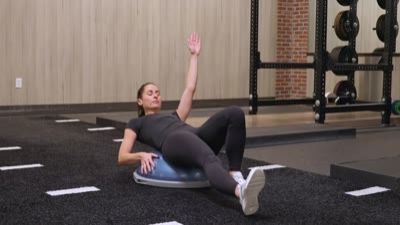
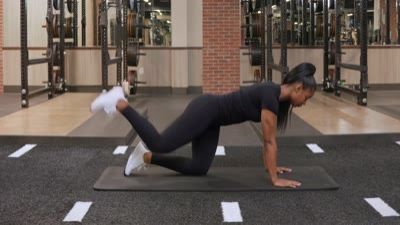
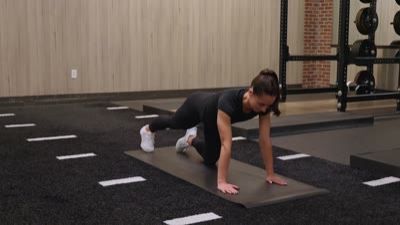
A stability-focused accessory exercise performed on a balance trainer that targets the gluteus maximus through hip extension. This movement simultaneously challenges your core strength, balance, and proprioception while isolating the rear glute muscles.
Iridium schedules this exercise to accumulate glute volume landmarks while sparing the lower back from heavy spinal loading. Since weight progression is minimal, the AI uses RPE tracking to ensure high exertion levels relative to your body weight. This movement often appears when your 7-day history indicates high systemic fatigue, allowing you to meet Minimum Effective Volume requirements without exceeding your Maximum Recoverable Volume.
Form Cues
- Plant your standing foot firmly on the center of the dome
- Engage your core to stabilize your spine
- Squeeze your glute to lift the leg backward
- Keep your hips squared to the front
- Move slowly to maintain balance
- Don't arch your lower back to lift the leg higher
- Don't use momentum to swing the leg
- Don't rotate your hips outward
- Don't look down at your feet excessively
Common Mistakes
- Hyperextending the lumbar spine
- Relying on momentum instead of muscle
- Placing the foot off-center on the dome
- Rotating the hips to force range of motion
- Rushing the tempo due to instability
Muscles Worked
The primary target is the gluteus maximus, which works to extend the hip against gravity. The unstable surface of the balance trainer recruits secondary stabilizers including the core, hamstrings, and the calves of the standing leg to maintain an upright posture.
Primary
Secondary

Get Personalized Coaching for Balance Trainer Rear Glute Raises
Don't guess your way through weights or workouts. Download Iridium for automatic, AI-powered coaching that adapts to your recovery and goals.