Foam Roll Hip Thrust
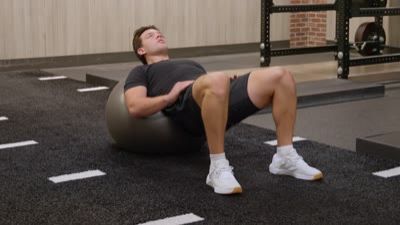
The Foam Roll Hip Thrust is a bodyweight glute exercise that involves performing a hip bridge with your upper back resting on a foam roller. This variation targets the glutes and hamstrings while challenging core stability due to the roller's tendency to shift.
Iridium treats this movement as a low-fatigue accessory, using it to accumulate glute volume without risking your Maximum Recoverable Volume. If your 7-day workout history shows recent heavy loading, the AI selects this lighter bodyweight variation to maintain muscle stimulation while managing total systemic fatigue.
Form Cues
- Position the roller just below your shoulder blades
- Drive through your heels to lift hips
- Tuck your chin slightly toward your chest
- Squeeze your glutes hard at the top
- Keep your core braced to stabilize the roller
- Don't let your lower back arch excessively
- Don't allow the roller to slide backward
- Don't push through your toes
- Don't let your knees cave inward
- Don't swing your hips up with momentum
Common Mistakes
- Hyperextending the lumbar spine
- Placing feet too far forward
- Using momentum instead of glute strength
- Letting the foam roller slide out
- Failing to reach full hip extension
Muscles Worked
This exercise primarily targets the gluteus maximus to drive hip extension, with the foam roller adding a component of instability that forces greater core engagement. The hamstrings act as secondary movers, assisting the glutes in lifting the hips, while the abdominals work to prevent the roller from moving.
Primary
Secondary



Get Personalized Coaching for Foam Roll Hip Thrust
Don't guess your way through weights or workouts. Download Iridium for automatic, AI-powered coaching that adapts to your recovery and goals.