Hip Hinge
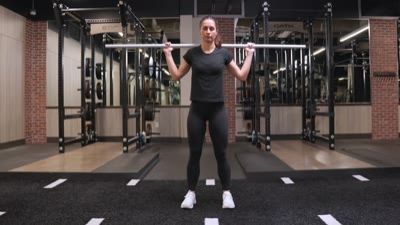
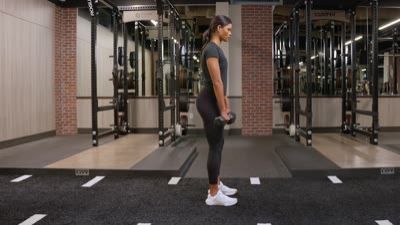
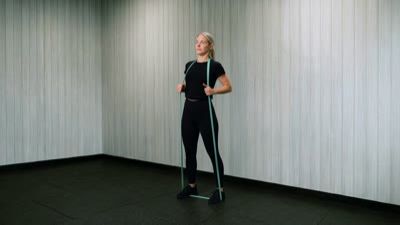
The hip hinge is a fundamental movement pattern that involves bending at the hips while maintaining a neutral spine to effectively target the posterior chain. It serves as the technical foundation for powerful lifts like deadlifts and kettlebell swings while building hamstring and glute strength.

Iridium often programs this bodyweight movement as a specific warmup or active recovery option when your recent training load shows accumulated fatigue in the erector spinae. Rather than tracking 1RM strength here, the algorithm uses your RPE feedback to determine when the motor pattern feels effortless enough to graduate you to loaded variations like RDLs or kettlebell swings.
Form Cues
- Push your hips back toward the wall behind you
- Keep a slight, soft bend in your knees throughout
- Maintain a flat back from head to tailbone
- Drive through your heels and squeeze your glutes to stand up
- Keep your chin tucked and neck neutral
- Don't round your lower back
- Don't turn the movement into a squat by bending your knees too deep
- Don't crane your neck to look forward or up
- Don't hyperextend or lean back at the top of the movement
Common Mistakes
- Squatting instead of hinging
- Rounding the lumbar spine
- Looking up and straining the neck
- Hyperextending the lower back at lockout
- Keeping legs completely straight and locked
Muscles Worked
This movement primarily targets the posterior chain, specifically engaging the hamstrings and glutes as they control the descent and drive the hips forward. The erector spinae and core muscles work isometrically to maintain a rigid, neutral spine throughout the range of motion.
Primary
Secondary

Get Personalized Coaching for Hip Hinge
Don't guess your way through weights or workouts. Download Iridium for automatic, AI-powered coaching that adapts to your recovery and goals.