Pulse Back Squat (Barbell)
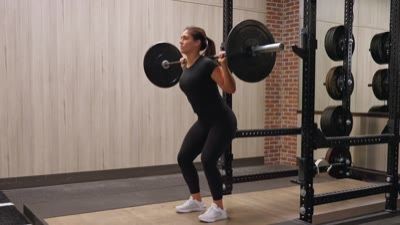
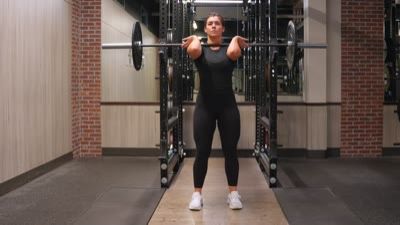
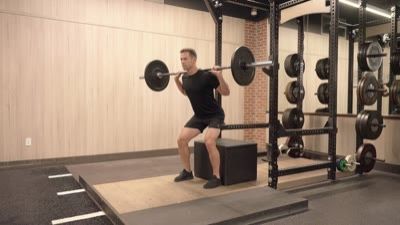
The Barbell Pulse Back Squat is a lower-body strength exercise where you perform a small, controlled partial repetition at the bottom of a squat before standing up. This technique increases time under tension for the quadriceps and glutes, helping to improve core stability and strength out of the bottom position.

Pulse squats rely on time under tension rather than heavy loads, so Iridium prioritizes your RPE inputs over raw weight numbers to measure progressive overload. The system also checks the recovery status of your erector spinae to ensure your lower back isn't pre-fatigued from recent heavy training before assigning this accessory.
Form Cues
- Brace your core tight before descending
- Lower steadily until thighs are parallel to the floor
- Pulse up 2-3 inches smoothly at the bottom
- Drive through your whole foot to stand up
- Keep your chest tall throughout the pulse
- Don't bounce aggressively off your calves
- Don't let your knees cave inward
- Don't round your lower back during the pulse
- Don't lift your heels off the floor
- Don't cut the depth short
Common Mistakes
- Using excessive momentum to bounce
- Pulsing too high above parallel
- Collapsing the chest forward
- Rushing the pulse movement
- Using too much weight
Muscles Worked
This exercise primarily targets the quadriceps and glutes by forcing them to maintain tension through the most difficult portion of the lift, known as the 'hole.' By adding the pulse at the bottom, you significantly increase the workload on these muscles while also engaging your core and erector spinae to maintain torso stability under prolonged fatigue.
Primary
Secondary

Get Personalized Coaching for Pulse Back Squat (Barbell)
Don't guess your way through weights or workouts. Download Iridium for automatic, AI-powered coaching that adapts to your recovery and goals.