Single Leg Glute Bridge
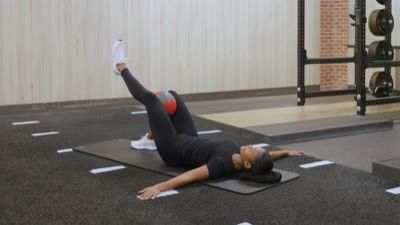
The Single Leg Glute Bridge is a unilateral bodyweight exercise that isolates the glutes and hamstrings while challenging core stability. It effectively corrects muscle imbalances and strengthens the posterior chain without requiring equipment.

Iridium tracks your repetition performance relative to your body weight to ensure accurate progressive overload calculations without external iron. The AI often programs this exercise to fulfill Maximum Adaptive Volume targets for the glutes when your 7-day history indicates high fatigue in the lower back or spinal erectors.
Form Cues
- Drive through the heel of your working foot
- Squeeze your glutes hard at the top position
- Keep your hips level and square to the ceiling
- Brace your core to keep your ribs down
- Maintain a straight line from shoulder to knee at the peak
- Don't arch your lower back to get higher
- Don't let your pelvis tilt or drop to one side
- Don't push off your toes; keep the foot flat
- Don't swing the non-working leg to generate momentum
Common Mistakes
- Hyperextending the lumbar spine
- Allowing hips to rotate
- Placing foot too far forward (hamstring dominance)
- Rushing the tempo
- Insufficient glute contraction at top
Muscles Worked
This exercise primarily targets the gluteus maximus to drive hip extension, with significant assistance from the hamstrings. It also heavily engages the gluteus medius and core stabilizers to prevent the pelvis from tipping while balancing on one leg.
Primary
Secondary

Get Personalized Coaching for Single Leg Glute Bridge
Don't guess your way through weights or workouts. Download Iridium for automatic, AI-powered coaching that adapts to your recovery and goals.