Lacrosse Ball - Calves
The Lacrosse Ball Calf Release is a targeted self-myofascial release (SMR) technique designed to alleviate deep tissue tightness in the gastrocnemius and soleus muscles. By using a firm ball to apply focused pressure, this exercise helps break up trigger points, improve ankle mobility, and reduce lower leg tension caused by running or heavy lifting.

Iridium assigns this soft tissue work when your per-muscle recovery status indicates the calves have accumulated significant fatigue from recent training. The AI treats this as a time-based component, scaling the duration to fit your stated workout availability without interfering with your main lift volume.
Form Cues
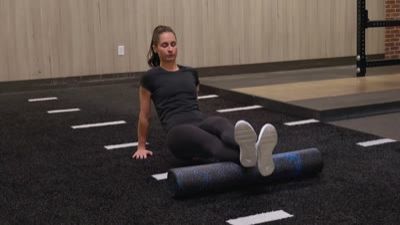
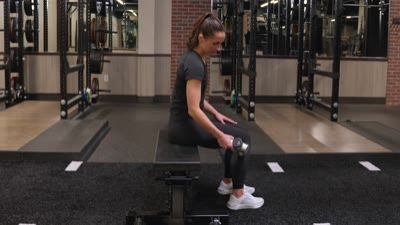
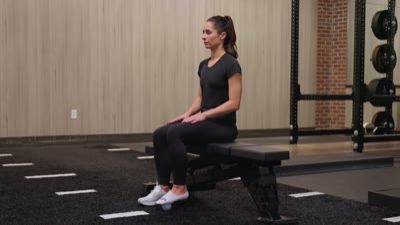
- Sit with legs extended and place the ball under the meaty part of the calf
- Cross your opposite leg over the active leg to increase downward pressure
- Slowly hunt for tender trigger points or 'knots' in the muscle belly
- Hold static pressure on tight spots for at least 30 seconds until tension melts
- Flex and point your toes (pump the ankle) while pinning a tight spot
- Don't place the ball directly behind the knee joint (popliteal fossa)
- Don't roll quickly back and forth like a rolling pin
- Don't tense or flex the calf muscle against the ball; keep it relaxed
- Don't hold your breath when you encounter a painful spot
- Don't apply pressure directly onto the shin bone
Common Mistakes
- Rolling too fast to find trigger points
- Applying pressure deeply behind the knee
- Tensing the muscle instead of relaxing
- Ignoring the sides of the calf (peroneals)
- Spending insufficient time on tender spots
Muscles Worked
This exercise primarily targets the gastrocnemius and soleus muscles, which make up the bulk of the calf and are prone to tightness from daily movement. By releasing tension in these areas, you indirectly benefit the Achilles tendon and plantar fascia, helping to restore proper ankle range of motion.
Primary

Get Personalized Coaching for Lacrosse Ball - Calves
Don't guess your way through weights or workouts. Download Iridium for automatic, AI-powered coaching that adapts to your recovery and goals.