Behind the Back Cable Lateral Raise
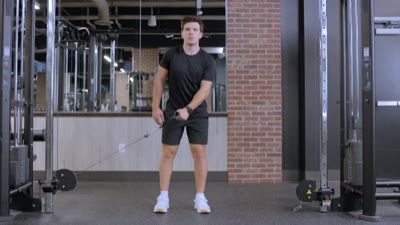
The Behind the Back Cable Lateral Raise is an isolation exercise targeting the lateral deltoids by pulling a low cable attachment from behind the body. This variation places the shoulder in a stretched position to increase range of motion and maintain constant tension throughout the lift.

This exercise places the lateral deltoid in a lengthened position under constant tension, so Iridium tracks sub-muscle-group fatigue to ensure this volume doesn't limit recovery for heavy pressing. Since this is a unilateral movement that extends set duration, the AI also checks your configured time constraints and may swap it for a bilateral alternative if your schedule is tight.
Form Cues
- Stand sideways to the machine with the cable running behind your legs
- Lean slightly away from the machine to maintain tension
- Lead the movement with your elbow, not your hand
- Raise your arm until it is parallel to the floor
- Control the weight slowly on the way down
- Don't let the weight stack touch down between reps
- Don't shrug your shoulders up toward your ears
- Don't swing your torso to generate momentum
- Don't let your wrist travel higher than your elbow
Common Mistakes
- Shrugging the traps
- Using excessive momentum
- Leading with the wrist
- Standing too close to the machine
Muscles Worked
This exercise primarily targets the lateral (side) deltoid, which is responsible for shoulder width. By performing the movement with the cable behind the back, you alter the angle of pull to minimize trap involvement and keep constant tension on the side delt compared to dumbbell variations.
Primary
Secondary


Get Personalized Coaching for Behind the Back Cable Lateral Raise
Don't guess your way through weights or workouts. Download Iridium for automatic, AI-powered coaching that adapts to your recovery and goals.