Katana Tricep Extension (Cable)
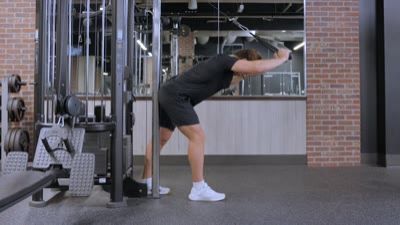
The Katana Tricep Extension is a cable-based isolation exercise that targets the long head of the triceps through a deep overhead stretch. By extending the arms from behind the head in a motion mimicking drawing a sword, it builds upper arm mass and strength.
Because this variation emphasizes the triceps long head in a lengthened position, Iridium uses sub-muscle-group fatigue awareness to program it when your heavy pressing has primarily taxed the lateral or medial heads. The system tracks your 7-day workout history and Maximum Recoverable Volume to ensure this isolation work stimulates growth without compromising recovery for your main compound lifts.
Form Cues
- Stagger your stance and lean forward slightly for stability
- Keep your elbows high and relatively close to your head
- Allow your hands to travel deep behind your neck to maximize the stretch
- Extend your arms forward and out in a smooth arc motion
- Squeeze your triceps hard at the point of full extension
- Don't let your elbows flare out excessively wide
- Don't arch your lower back to help move the weight
- Don't cut the range of motion short at the bottom
- Don't use momentum or body sway to initiate the rep
Common Mistakes
- Excessive elbow flare
- Incomplete range of motion
- Hyperextending the lower back
- Using momentum to swing the weight
- Shrugging shoulders towards ears
Muscles Worked
This exercise is specifically designed to target the long head of the triceps brachii by placing the shoulder in a flexed, overhead position, which creates a significant stretch on the muscle. While the medial and lateral heads assist in the lockout, the overhead angle ensures the long head bears the majority of the load for improved arm thickness.
Primary
Secondary
Get Personalized Coaching for Katana Tricep Extension (Cable)
Don't guess your way through weights or workouts. Download Iridium for automatic, AI-powered coaching that adapts to your recovery and goals.