Outdoor Road Running
Outdoor road running is a high-impact cardiovascular exercise performed on paved surfaces that builds lower body endurance and aerobic capacity. It engages the quads, calves, and glutes while improving overall heart health and bone density.

Iridium accounts for the high-impact nature of road running by checking your sleep data and metabolic recovery estimates to generate a readiness score. The system also tracks the specific fatigue accumulation in your quadriceps and calves, adjusting the volume of nearby leg workouts to prevent interference with your strength training.
Form Cues
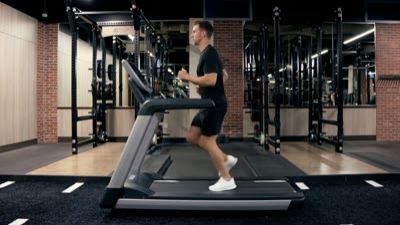
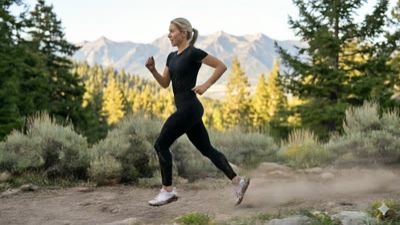
- Maintain an upright posture with a slight forward lean from the ankles
- Land on your mid-foot directly underneath your hips
- Keep your gaze fixed on the horizon rather than your feet
- Swing your arms forward and back with relaxed shoulders
- Aim for a quick, light cadence to minimize ground contact time
- Don't overstride by letting your foot land far in front of your body
- Don't cross your arms over the center of your chest while swinging
- Don't land heavily on your heels with a locked knee
- Don't hunch your shoulders up toward your ears
Common Mistakes
- Overstriding
- Excessive heel striking
- Running with tense shoulders
- Inconsistent pacing
- excessive vertical bouncing
Muscles Worked
This exercise primarily targets the quadriceps and calves as they absorb impact and propel the body forward. It also engages the hamstrings and glutes for hip extension, while the core muscles work continuously to stabilize the torso and maintain posture against gravity.
Primary
Secondary


Get Personalized Coaching for Outdoor Road Running
Don't guess your way through weights or workouts. Download Iridium for automatic, AI-powered coaching that adapts to your recovery and goals.