Push-up (Exercise Ball)
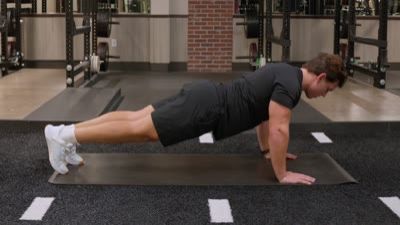
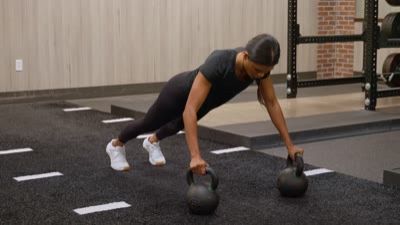
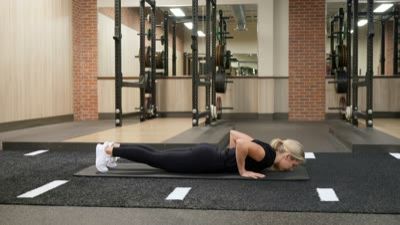
The Push-up (Exercise Ball) is an intermediate upper body exercise that challenges chest strength and core stability by placing the hands on an unstable Swiss ball. This variation recruits more stabilizer muscles in the shoulders and abs compared to a standard floor push-up.
This variation places significantly higher demand on the anterior deltoids and core stabilizers than standard floor pressing. Iridium evaluates your fatigue scores for these specific secondary muscle groups and may substitute a stable exercise if your recent training load indicates you cannot maintain control. For progression, Iridium tracks your RPE to ensure stability challenges do not prevent you from reaching an effective stimulus for the chest.
Form Cues
- Place hands on the sides of the ball directly under your shoulders
- Brace your core and squeeze your glutes to lock your hips in place
- Lower your chest slowly until it nearly touches the ball
- Press through your palms to return to the start position
- Keep your elbows tucked at a 45-degree angle to your body
- Don't let your hips sag or your lower back arch
- Don't allow your elbows to flare out wide perpendicular to your body
- Don't rush the movement or bounce off the ball
- Don't let your head drop forward; keep the neck neutral
Common Mistakes
- Placing hands too high on top of the ball
- Sagging at the hips due to lack of core tension
- Flaring elbows too wide
- Performing half-reps instead of full range of motion
- Looking up or tucking the chin excessively
Muscles Worked
This exercise primarily targets the pectoralis major (middle chest) while engaging the anterior deltoids and triceps for pushing power. The unstable surface forces the rotator cuff and core stabilizers—specifically the rectus abdominis and obliques—to work significantly harder than in a standard push-up to maintain balance and alignment.
Primary
Secondary


Get Personalized Coaching for Push-up (Exercise Ball)
Don't guess your way through weights or workouts. Download Iridium for automatic, AI-powered coaching that adapts to your recovery and goals.