Airplane
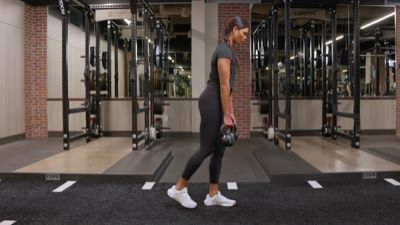
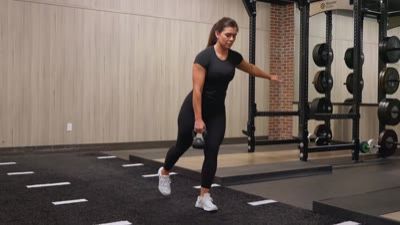
The Airplane is a bodyweight mobility and stability exercise that involves performing a single-leg hip hinge with arms extended to the sides. It primarily targets the glutes and hamstrings while challenging core strength and balance.

Iridium evaluates your per-muscle recovery status to ensure your glutes and hamstrings are not too fatigued to maintain balance during this stability drill. If you have enabled dynamic warmups in your preferences, the AI may program this exercise to prime your posterior chain before heavy compound lifts. To drive progression without external weight, Iridium tracks your RPE and set volume relative to your body weight to detect when increased difficulty is required.
Form Cues
- Hinge at your hips while lifting one leg behind you
- Extend your arms out to the sides like wings
- Keep your standing knee soft but stable
- Drive your heel toward the wall behind you
- Maintain a neutral spine from head to heel
- Don't lock your standing knee
- Don't round your lower back
- Don't let your hips rotate or tilt excessively
- Don't look straight down at your feet
- Don't rush the movement
Common Mistakes
- Rounding the upper back
- Locking the standing knee
- Rotating the pelvis open
- Losing balance due to speed
- Looking forward instead of neutral
Muscles Worked
This exercise primarily engages the gluteus maximus and hamstrings to extend the hip, while the gluteus medius works intensely to stabilize the pelvis on a single leg. The erector spinae and deep core muscles act as stabilizers to maintain a flat back and prevent rotation during the hold.
Primary
Secondary
Get Personalized Coaching for Airplane
Don't guess your way through weights or workouts. Download Iridium for automatic, AI-powered coaching that adapts to your recovery and goals.