Medicine Ball Squat
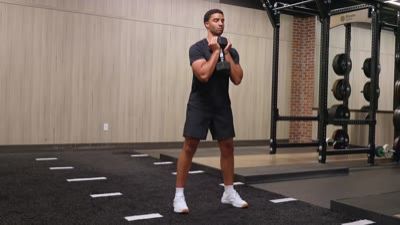
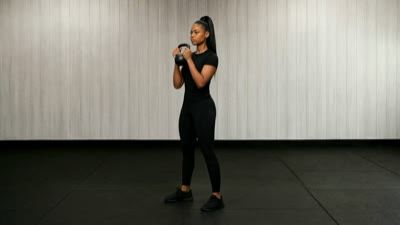
A functional lower-body exercise where you perform a squat while holding a medicine ball at chest height. This movement targets the quadriceps and glutes while the front-loaded weight improves core stability and squat mechanics.
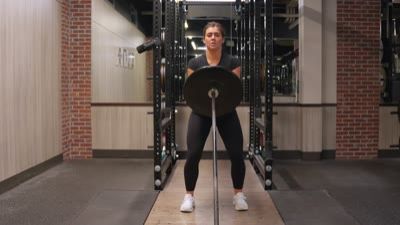
Since medicine ball weights are often limited, Iridium monitors your RPE trends to determine when the resistance is no longer sufficient to drive progressive overload for the quadriceps. Once the movement becomes too light to trigger strength or hypertrophy adaptations, the AI will rotate it out for a more scalable progression like goblet or barbell squats. This ensures your leg training contributes properly to your Minimum Effective Volume rather than becoming low-intensity conditioning.
Form Cues
- Hold the medicine ball tight against your chest
- Keep your chest up and elbows tucked in
- Drive your knees outward as you descend
- Push through your whole foot to stand up
- Brace your core before starting the descent
- Don't let the ball pull your upper body forward
- Don't allow your heels to lift off the ground
- Don't let your knees cave inward
- Don't round your lower back at the bottom
- Don't hold the ball far away from your body
Common Mistakes
- Rounding the upper back
- Lifting heels off the floor
- Knees collapsing inward
- Holding the ball too loosely
- Failing to reach proper depth
Muscles Worked
This exercise primarily strengthens the quadriceps and glutes, which are responsible for the squatting motion. The anterior position of the medicine ball acts as a counterweight, forcing the core and spinal erectors to work harder to maintain an upright torso.
Primary
Secondary

Get Personalized Coaching for Medicine Ball Squat
Don't guess your way through weights or workouts. Download Iridium for automatic, AI-powered coaching that adapts to your recovery and goals.