Windmill
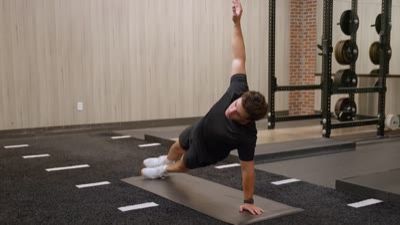
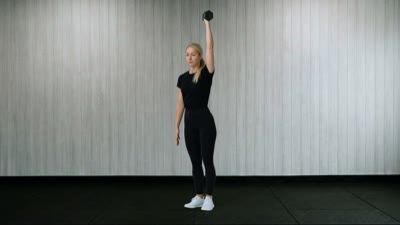
The Windmill is a functional compound exercise that combines a hip hinge with thoracic rotation to strengthen the obliques, shoulders, and core stabilizers. It improves hamstring flexibility and overhead stability while challenging the body through multiple planes of motion.

Iridium checks your 7-day workout history to ensure your anterior deltoids are recovered enough to handle the overhead stability demands of this movement. The AI counts this toward your weekly hinge and core volume while using your RPE feedback to regulate intensity for this technically complex lift.
Form Cues
- Hinge your hips back towards the side of the raised arm
- Keep your top arm vertical and locked out
- Look up at your top hand throughout the movement
- Keep the leg under the raised arm straight
- Engage your core to maintain a straight spine
- Don't simply side bend at the waist
- Don't round your lower back to reach the floor
- Don't let your top arm drift forward or backward
- Don't take your eyes off the top hand
- Don't bend the knee of the working leg
Common Mistakes
- Side bending instead of hip hinging
- Rounding the lumbar spine
- Losing overhead shoulder stability
- Bending both knees excessively
- Looking down at the ground
Muscles Worked
This exercise primarily targets the obliques and the stabilizers of the trunk, while the overhead position places a high demand on the anterior deltoid and rotator cuff for isometric stability. The movement also acts as a dynamic stretch and strengthening stimulus for the hamstrings and glutes on the working side.
Primary
Secondary


Get Personalized Coaching for Windmill
Don't guess your way through weights or workouts. Download Iridium for automatic, AI-powered coaching that adapts to your recovery and goals.