Cable Russian Twists
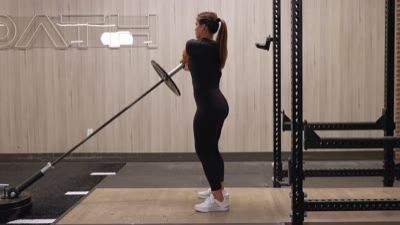
The Cable Russian Twist is a rotational core exercise performed seated using a cable machine to provide constant tension throughout the range of motion. It primarily targets the obliques and transverse abdominis to build rotational strength and improve spinal stability.
Iridium classifies this as a rotational movement and tracks oblique fatigue separately from anterior core work to ensure balanced abdominal development. The AI reviews your 7-day training history to place this exercise where it won't compromise spinal stability for heavy compound lifts like squats or deadlifts. Progression is managed through RPE tracking, signaling when to increase the cable weight based on your perceived effort.
Form Cues
- Sit perpendicular to the cable stack with your knees slightly bent and heels planted firmly.
- Keep your arms extended straight in front of your chest to create a long lever arm.
- Initiate the movement by rotating your ribcage and shoulders, not just your arms.
- Follow your hands with your eyes to ensure your head rotates in sync with your torso.
- Exhale forcefully as you twist away from the machine to maximize core engagement.
- Don't round your lower back or slouch; keep your spine neutral and tall.
- Don't pull with your biceps or bend your elbows significantly during the twist.
- Don't let your hips shift or your knees sway side-to-side.
- Don't use momentum or swing the weight back to the starting position.
- Don't allow your chin to tuck into your chest.
Common Mistakes
- Rounding the lumbar spine
- Pulling with arms instead of torso
- Shifting hips excessively
- Rushing the eccentric phase
- Using too much weight
Muscles Worked
This exercise primarily isolates the internal and external obliques, which are responsible for rotating the torso and stabilizing the spine. It also heavily recruits the rectus abdominis and transverse abdominis for overall core stability, while the forearms and shoulders work isometrically to maintain the arm position against the cable's resistance.
Primary
Secondary



Get Personalized Coaching for Cable Russian Twists
Don't guess your way through weights or workouts. Download Iridium for automatic, AI-powered coaching that adapts to your recovery and goals.