Medicine Ball Side Lunge
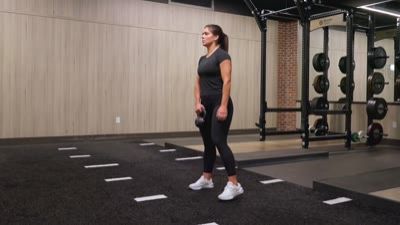
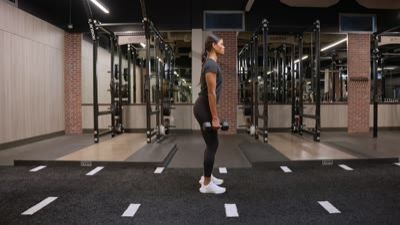
The Medicine Ball Side Lunge is a lateral lower-body exercise that targets the quadriceps, glutes, and adductors while engaging the core for stability. By holding a weighted ball at chest level, this movement improves balance, hip mobility, and functional strength in the frontal plane.

Iridium tracks this exercise toward your quadriceps and glute volume with a specific calculation for the increased stability demands on your obliques. Since balance often limits the load on lateral lunges, the AI relies heavily on your set-by-set RPE to judge if the intensity is sufficient for hypertrophy rather than chasing a 1RM. Iridium also checks your 7-day workout history to ensure you aren't programmed this movement if your stabilizers are already fatigued from recent heavy compound lifting.
Form Cues
- Hold the medicine ball firmly against your chest with elbows tucked.
- Step out wide to the side while keeping the trailing leg perfectly straight.
- Push your hips back and down as if sitting into a chair on the lunging side.
- Keep your chest upright and your spine neutral throughout the descent.
- Drive powerfully through the heel of the bent leg to return to the starting position.
- Don't let the knee of the lunging leg collapse inward past your big toe.
- Don't lift the heel of the lunging foot off the ground.
- Don't bend the knee of the stationary leg; keep it locked out.
- Don't round your upper back or hunch over the medicine ball.
- Don't step so wide that you cannot push yourself back up with good form.
Common Mistakes
- Bending the non-working leg
- Lifting the lunging heel
- Rounding the upper back
- Knee caving inward (valgus collapse)
- Shifting weight to the toes instead of the heel
Muscles Worked
This exercise primarily strengthens the quadriceps and glutes while placing significant demand on the adductors (inner thighs) and abductors due to the lateral movement pattern. The addition of the medicine ball forces the core, specifically the obliques and spinal erectors, to work harder to maintain an upright torso against the anterior load.
Primary
Secondary


Get Personalized Coaching for Medicine Ball Side Lunge
Don't guess your way through weights or workouts. Download Iridium for automatic, AI-powered coaching that adapts to your recovery and goals.