Scissor Kick
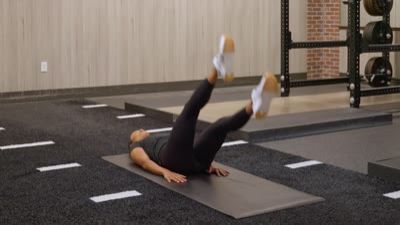
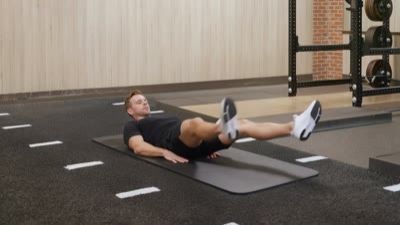
The scissor kick is a dynamic core exercise that strengthens the lower abdominals and hip flexors by alternating straight-leg raises in a controlled rhythm. This movement challenges your ability to maintain pelvic stability and a neutral spine against the leverage of your moving legs.

This exercise heavily recruits the hip flexors, so Iridium utilizes sub-muscle-group fatigue tracking to ensure recent leg workouts haven't already exhausted these secondary muscles. The system applies this volume toward your lower abdominal Minimum Effective Volume and uses RPE feedback to determine when steady repetition increases are necessary for progressive overload.
Form Cues
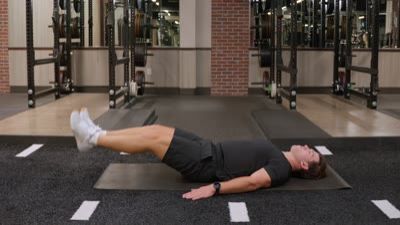
- Press your lower back firmly into the floor throughout the entire set
- Place your hands under your glutes to support your pelvis if needed
- Keep your legs as straight as possible with only a soft bend in the knees
- Brace your core tight as if preparing for a punch
- Control the descent of each leg rather than letting it drop
- Don't allow your lower back to arch or lift off the mat
- Don't tuck your chin aggressively or strain your neck forward
- Don't swing your legs using momentum
- Don't let your heels touch the floor between reps
Common Mistakes
- Arching the lower back
- Relying on momentum
- Straining the neck
- Bending knees excessively
- Holding breath
Muscles Worked
This exercise primarily targets the lower region of the rectus abdominis and the deep transverse abdominis, which must contract isometrically to stabilize the pelvis. The hip flexors act as secondary movers to lift the legs, making this a potent movement for anterior core strength and hip mobility.
Primary
Secondary
Get Personalized Coaching for Scissor Kick
Don't guess your way through weights or workouts. Download Iridium for automatic, AI-powered coaching that adapts to your recovery and goals.