Side Plank Clam Lifts
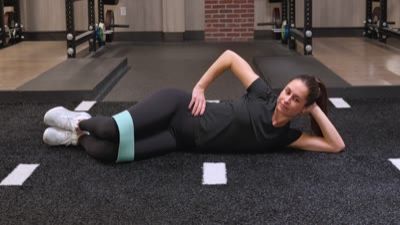
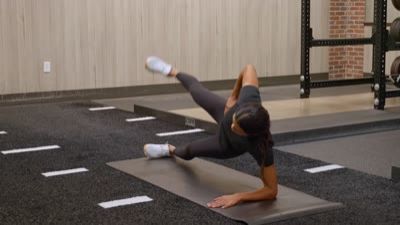
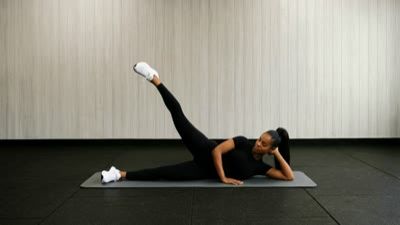
The Side Plank Clam Lift is a hybrid bodyweight exercise that combines isometric core stability with dynamic hip strengthening. It simultaneously targets the obliques and the gluteus medius to improve lateral stability and hip function.

Since this exercise taxes the lateral deltoids isometrically while working the glutes, Iridium reviews your recent training load to ensure your shoulder stabilizers aren't pre-fatigued. The system tracks your rep performance relative to your current body weight to ensure you are meeting the requirements for progressive overload.
Form Cues
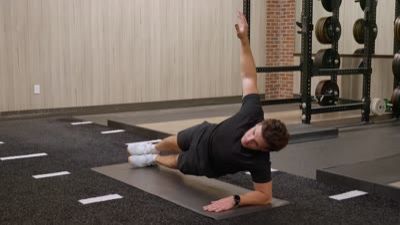
- Place your elbow directly under your shoulder
- Lift your hips to form a straight line from head to knees
- Keep your heels pressed together throughout the set
- Squeeze your glutes to rotate the top knee upward
- Brace your core to prevent your torso from twisting
- Don't let your bottom hip sag toward the floor
- Don't roll your top shoulder backward to lift the leg
- Don't separate your feet as you open the knee
- Don't rush the movement; control the lowering phase
Common Mistakes
- Sagging hips due to fatigue
- Rotating the spine instead of the hip
- Placing the elbow too far forward
- Using momentum to swing the knee open
Muscles Worked
This movement is a powerhouse for lateral stability, primarily targeting the gluteus medius and the obliques. It also engages the gluteus maximus for hip external rotation and relies on the shoulder stabilizers to hold the upper body elevated.
Primary
Secondary
Get Personalized Coaching for Side Plank Clam Lifts
Don't guess your way through weights or workouts. Download Iridium for automatic, AI-powered coaching that adapts to your recovery and goals.