Stability Ball Seated Twist
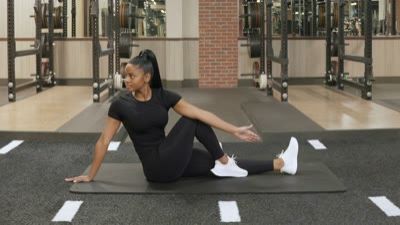
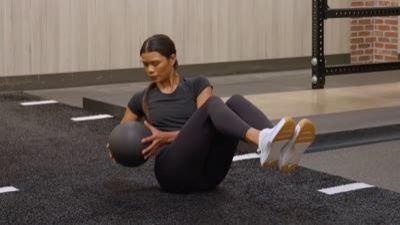
The Stability Ball Seated Twist is a core exercise that targets the obliques and improves rotational mobility while challenging your balance. By sitting on an unstable surface, you engage deep stabilizing muscles to maintain posture during the twisting motion.

Iridium treats this as a rotational oblique movement, checking your 7-day workout history to ensure your core has adequate recovery capacity following heavy compound lifts. To manage progressive overload without external weight, the algorithm analyzes your RPE trends and rep performance relative to your current body weight.
Form Cues
- Sit tall with your feet planted firmly hip-width apart
- Engage your core by drawing your navel toward your spine
- Rotate slowly through your ribcage, not just your arms
- Exhale deeply as you twist to the side
- Keep your hips square and stationary on the ball
- Don't let your hips swivel or roll with your torso
- Don't swing the weight using momentum
- Don't round your shoulders or slouch forward
- Don't hold your breath during the rotation
- Don't allow your knees to collapse inward
Common Mistakes
- Swiveling hips instead of torso
- Using momentum to generate force
- Slouching or rounding the back
- Moving feet to maintain balance
- Rotating beyond active range of motion
Muscles Worked
This movement primarily targets the internal and external obliques, which are crucial for rotational power and waist definition. By performing the twist on an unstable ball, you effectively recruit the transverse abdominis and spinal erectors to stabilize your vertebral column against the shifting center of gravity.
Primary
Secondary


Get Personalized Coaching for Stability Ball Seated Twist
Don't guess your way through weights or workouts. Download Iridium for automatic, AI-powered coaching that adapts to your recovery and goals.