V-Sit
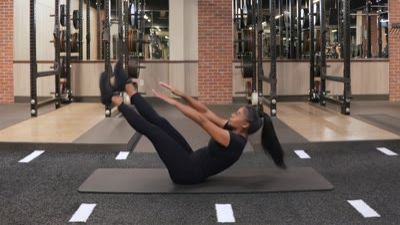
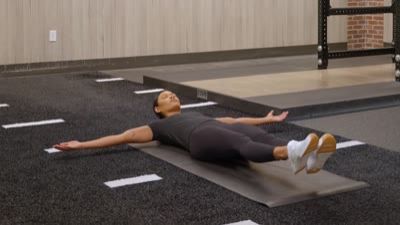
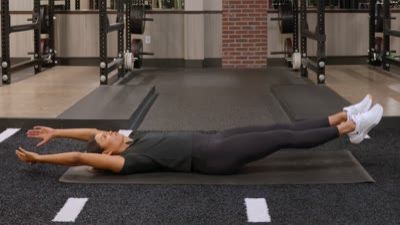
The V-Sit is an intermediate core exercise that challenges abdominal strength and balance by requiring you to hold your body in a V-shape. It targets the entire rectus abdominis and hip flexors while improving isometric core stability.

Iridium treats this as a time-based isometric hold, using RPE feedback to determine when you are ready to extend the duration of your sets. Because the V-Sit creates significant hip flexor fatigue, the algorithm checks your 7-day workout history to ensure recent lower-body sessions won't limit your performance.
Form Cues
- Balance on your sit bones rather than your tailbone
- Keep your chest lifted and spine neutral throughout the hold
- Draw your belly button firmly toward your spine to engage the deep core
- Extend your arms forward parallel to the ground to aid balance
- Squeeze your legs together and point your toes
- Don't allow your lower back to round or collapse
- Don't shrug your shoulders up toward your ears
- Don't hold your breath; keep breathing rhythmically
- Don't look down at your stomach; keep your gaze forward
- Don't let your legs drop below the point where you can maintain a flat back
Common Mistakes
- Rounding the upper back (Kyphosis)
- Holding breath during exertion
- Relying entirely on hip flexors
- Jutting the chin forward
- Collapsing the chest
Muscles Worked
The V-Sit primarily targets the rectus abdominis, engaging both the upper and lower sections to maintain the folded position against gravity. Secondary emphasis is placed on the hip flexors (iliopsoas) and quadriceps to keep the legs elevated, while the spinal erectors work isometrically to keep the back straight.
Primary
Secondary
Get Personalized Coaching for V-Sit
Don't guess your way through weights or workouts. Download Iridium for automatic, AI-powered coaching that adapts to your recovery and goals.