Balance Trainer TRX Squat Jumps
The Balance Trainer TRX Squat Jump is a dynamic plyometric exercise that combines instability training with explosive power development. It targets the quadriceps and glutes while utilizing suspension straps to assist with balance and landing mechanics on an unstable surface.
Iridium validates your recovery score using sleep and metabolic data before programming this exercise due to the significant neural fatigue caused by unstable plyometrics. The system tracks your repetition performance relative to body weight to ensure progressive overload is maintained without external load. If your 7-day workout history indicates accumulated leg fatigue, Iridium will substitute a stable alternative to manage systemic stress.
Form Cues
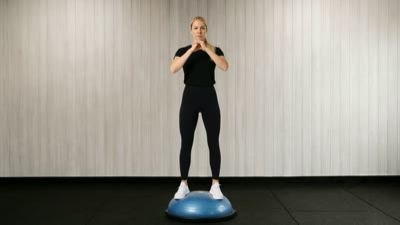
- Stand centered on the balance trainer dome with feet hip-width apart
- Hold the TRX handles with light tension to aid balance
- Drop into a squat and immediately explode upward into a jump
- Land softly on the dome, rolling from toe to heel
- Keep your chest up and eyes forward throughout the movement
- Don't pull yourself upward with your arms; rely on leg power
- Don't land with straight or locked knees
- Don't let your knees collapse inward upon landing
- Don't look down at your feet, as this rounds the spine
Common Mistakes
- Relying too much on arm strength
- Landing heavily with stiff legs
- Allowing knees to cave inward
- Uneven foot placement on the dome
Muscles Worked
This exercise primarily recruits the quadriceps and glutes to generate the explosive force required for the jump. The instability of the balance trainer forces the calves, tibialis anterior, and core muscles to work overtime to maintain alignment, while the hamstrings assist in decelerating the body during the landing.
Primary
Secondary


Get Personalized Coaching for Balance Trainer TRX Squat Jumps
Don't guess your way through weights or workouts. Download Iridium for automatic, AI-powered coaching that adapts to your recovery and goals.