High Depth Jump
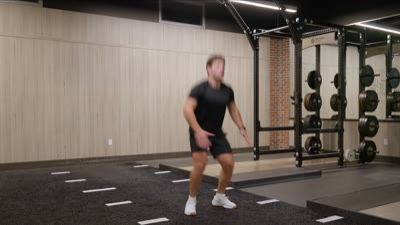
The High Depth Jump is an advanced plyometric exercise designed to maximize explosive power and vertical jump height by utilizing the stretch-shortening cycle. Athletes step off an elevated box and immediately rebound upwards upon landing, training the nervous system to react quickly and forcefully.

Since depth jumps require high central nervous system readiness, Iridium restricts this exercise to days where your recovery score and sleep data indicate sufficient freshness for peak power output. The AI reviews your 7-day workout history to ensure your quadriceps and calves are fully recovered from recent volume before introducing this high-impact loading.
Form Cues
- Step off the box rather than jumping off it
- Land softly on the balls of your feet
- Explode upward immediately upon ground contact
- Drive your arms upward to generate momentum
- Keep your knees aligned with your toes during landing
- Don't jump upwards off the initial box
- Don't let your heels slam into the floor
- Don't allow your knees to cave inward
- Don't spend too much time on the ground before jumping
- Don't land with straight, locked legs
Common Mistakes
- Using a box that is too high
- Jumping up before dropping down
- Spending too long on the ground (slow reaction)
- Landing with a loud, heavy thud
- Collapsing the chest forward upon landing
Muscles Worked
This exercise primarily targets the fast-twitch fibers of the quadriceps and glutes to generate massive vertical force. The calves and tibialis anterior work intensely to handle the rapid deceleration and immediate re-acceleration, improving ankle stiffness and overall reactive athleticism.
Primary
Secondary



Get Personalized Coaching for High Depth Jump
Don't guess your way through weights or workouts. Download Iridium for automatic, AI-powered coaching that adapts to your recovery and goals.