Kettlebell Hip March
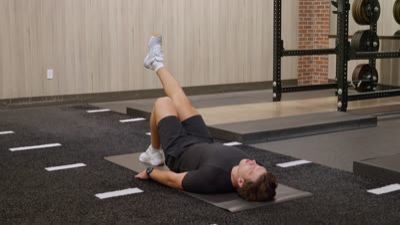
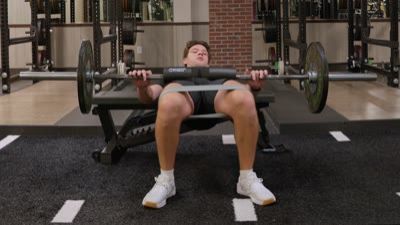
The Kettlebell Hip March is a dynamic stability exercise that combines a weighted glute bridge with alternating leg lifts. This movement targets the glutes and core, challenging your ability to maintain pelvic alignment while resisting rotation.
Iridium programs this movement as a stability-focused accessory, utilizing it to accumulate volume for the hip flexors and glutes without high systemic fatigue. The AI checks your per-muscle recovery status to ensure your core is not too pre-fatigued from recent sessions to maintain alignment. As your stability improves, Iridium detects opportunities for heavier loading by analyzing your weight and RPE trends across sessions.
Form Cues
- Drive your heels firmly into the floor to lift your hips.
- Squeeze your glutes hard to maintain full hip extension.
- Brace your core tightly to lock your pelvis in place.
- March one knee slowly toward your chest without shifting your hips.
- Keep the kettlebell stable across your hip crease.
- Don't let one hip drop when lifting the opposite leg.
- Don't arch your lower back to maintain height.
- Don't swing your legs using momentum.
- Don't place the kettlebell directly on your stomach.
- Don't let your knees cave inward.
Common Mistakes
- Rotating the pelvis side-to-side
- Hyperextending the lumbar spine
- Allowing hips to sag
- Rushing the marching tempo
- Placing feet too far forward
Muscles Worked
This exercise primarily targets the gluteus maximus and hamstrings to maintain the bridge position isometrically. Simultaneously, it engages the deep core stabilizers (transverse abdominis) to prevent rotation and the hip flexors to perform the dynamic marching movement.
Primary
Secondary


Get Personalized Coaching for Kettlebell Hip March
Don't guess your way through weights or workouts. Download Iridium for automatic, AI-powered coaching that adapts to your recovery and goals.