Lateral Bound
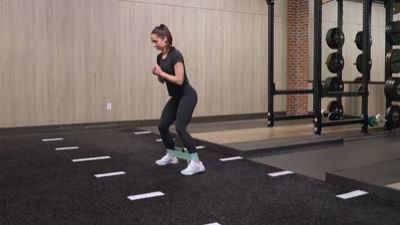
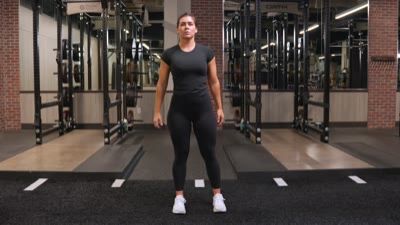
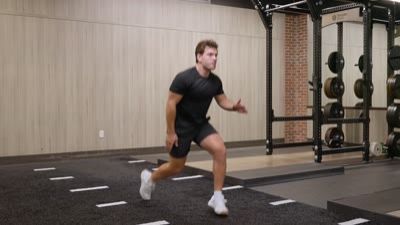
The Lateral Bound is a dynamic plyometric exercise that involves jumping side-to-side to build explosive power and lateral agility. It primarily targets the glutes, quadriceps, and adductors while improving athletic stability and single-leg coordination.

Iridium identifies lateral bounds as a high-impact plyometric movement, so it analyzes your per-muscle recovery status to ensure your adductors and glutes are fresh enough for explosive work. Since this is a bodyweight exercise, the AI tracks your repetition performance relative to your current body weight to manage progressive overload accurately. If your 7-day history indicates high accumulated leg fatigue, Iridium may reduce volume or substitute a lower-impact variation.
Form Cues
- Push explosively off the outside edge of your foot
- Land softly with a bent knee to absorb impact
- Load your hips back immediately upon landing
- Keep your chest up and core braced throughout the jump
- Swing your arms to generate momentum and balance
- Don't land with a straight, locked knee
- Don't let your knee collapse inward upon landing
- Don't round your back or look down at the floor
- Don't rush the movement; stabilize before bounding back if needed
Common Mistakes
- Landing with stiff legs
- Allowing knees to cave inward (valgus)
- Hunching the upper back
- Sacrificing distance for speed
- Inadequate shock absorption
Muscles Worked
This exercise is a powerhouse for the gluteus medius and quadriceps, forcing them to generate explosive force laterally and then immediately act as brakes to stabilize the body. It also heavily recruits the adductors and calves for propulsion, while the core fires to maintain balance during the dynamic weight shift.
Primary
Secondary

Get Personalized Coaching for Lateral Bound
Don't guess your way through weights or workouts. Download Iridium for automatic, AI-powered coaching that adapts to your recovery and goals.