Lower Body Crawl
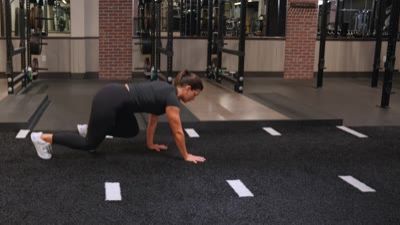
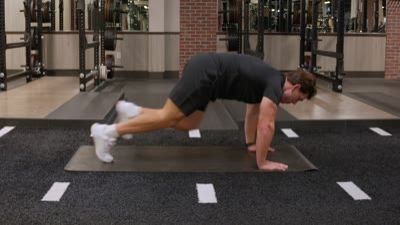
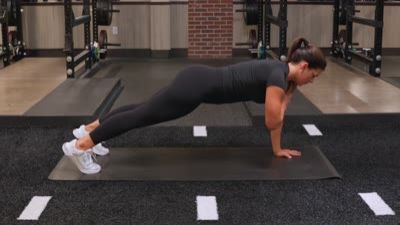
The Lower Body Crawl is a functional bodyweight exercise performed on hands and toes with knees hovering just above the ground. It builds full-body stability, core strength, and quadriceps endurance by challenging you to maintain a flat back during locomotion.

Iridium tracks progressive overload for this time-based movement by analyzing your RPE relative to duration and current body weight. The algorithm also logs the secondary fatigue accumulated in your anterior deltoids and core, ensuring these stabilizers are not the limiting factor in your subsequent pressing or squatting sessions.
Form Cues
- Hover your knees 1-2 inches off the floor
- Keep your back flat like a tabletop
- Move opposite hand and foot simultaneously
- Brace your core to resist hip rotation
- Keep your gaze slightly forward on the floor
- Don't let your hips pike up toward the ceiling
- Don't let your lower back sag or arch
- Don't sway your hips side-to-side
- Don't crane your neck to look up
- Don't take large, uncontrolled steps
Common Mistakes
- Hips rising too high
- Excessive hip rotation
- Knees touching the ground
- Rushing the tempo
- Rounding the spine
Muscles Worked
This movement places significant constant tension on the quadriceps and hip flexors to keep the knees hovering above the ground. Simultaneously, the deep core muscles and anterior deltoids work aggressively to stabilize the spine and pelvis against the rotational forces created by moving your limbs.
Primary
Secondary

Get Personalized Coaching for Lower Body Crawl
Don't guess your way through weights or workouts. Download Iridium for automatic, AI-powered coaching that adapts to your recovery and goals.