Side Lunge
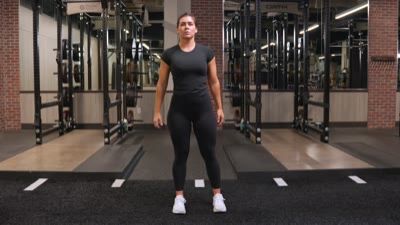
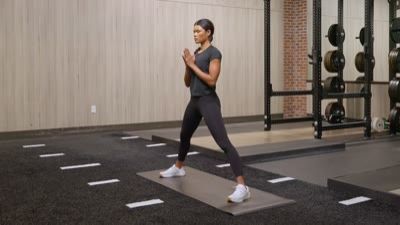
The side lunge is a functional lower body exercise that targets the quadriceps, glutes, and inner thighs by moving through the frontal plane. This lateral movement improves hip mobility, balance, and leg strength while correcting muscle imbalances.

Iridium calculates fatigue for the adductors separately from the main quadriceps muscles to ensure this lateral movement doesn't overload legs already fatigued by heavy squats. The AI analyzes your 7-day workout history to insert this exercise when your Maximum Recoverable Volume allows for accessory work in the frontal plane. For bodyweight versions, Iridium scales performance targets relative to your body weight to verify you are achieving actual progressive overload.
Form Cues
- Step out wide to the side
- Push your hips back and down like sitting in a chair
- Keep the trailing leg perfectly straight
- Keep both feet flat on the floor
- Drive through the heel to return to center
- Don't let your heel lift off the ground
- Don't bend the knee of the straight leg
- Don't round your lower back
- Don't let your knee cave inward past your toes
Common Mistakes
- Lifting the heel of the lunging foot
- Bending the non-working leg
- Rounding the spine forward
- Taking too small of a step
- Allowing the knee to collapse inward
Muscles Worked
This exercise primarily strengthens the quadriceps and glutes while placing significant emphasis on the adductors (inner thigh) and gluteus medius for hip stability. By working in the frontal plane (side-to-side), it addresses muscles often neglected by traditional squats and forward lunges, promoting better athletic performance and injury prevention.
Primary
Secondary


Get Personalized Coaching for Side Lunge
Don't guess your way through weights or workouts. Download Iridium for automatic, AI-powered coaching that adapts to your recovery and goals.