Hip Circles
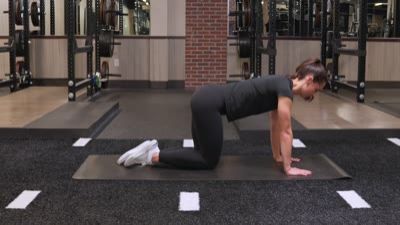
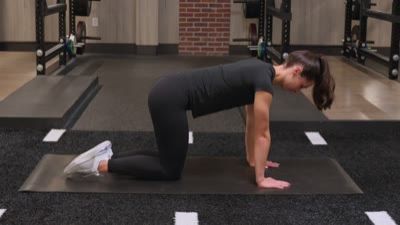
Hip circles are a dynamic mobility exercise designed to loosen the hip joint and improve range of motion. This movement involves controlled rotation of the leg to target the hip flexors, abductors, and adductors while activating the core for stability.

Iridium treats hip circles as a preparation tool, checking your warmup preferences and time constraints to decide if they fit into your pre-lift routine. If your recovery scores indicate high fatigue in the lower body, the system prioritizes this movement to mobilize the hip flexors and glutes without adding systemic load.
Form Cues
- Stand tall and lightly hold a stable support for balance
- Initiate the movement from the hip socket, not the foot
- Keep your pelvis square and your spine neutral throughout
- Draw the largest controlled circle possible without pain
- Engage your core to prevent leaning or swaying
- Don't rock your torso back and forth to create momentum
- Don't hike your hip up toward your ribs to lift the leg
- Don't rush the movement; keep the tempo slow and deliberate
- Don't arch your lower back to extend the leg behind you
Common Mistakes
- Rocking the torso
- Hiking the hips
- Rushing the tempo
- Arching the lower back
- Moving from the knee
Muscles Worked
This exercise primarily targets the hip flexors and the muscles of the hip capsule, promoting synovial fluid production and joint lubrication. It effectively engages the gluteus medius and core stabilizers, which must fire isometrically to maintain pelvic alignment while the femur rotates.
Primary
Secondary


Get Personalized Coaching for Hip Circles
Don't guess your way through weights or workouts. Download Iridium for automatic, AI-powered coaching that adapts to your recovery and goals.