Pigeon Pose
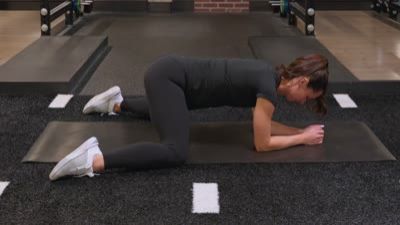
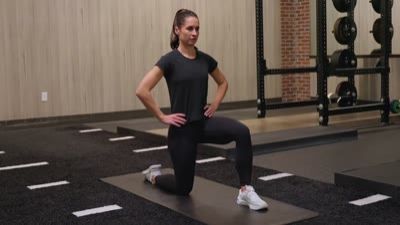
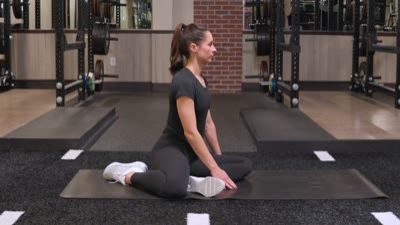
Pigeon Pose is a deep hip-opening stretch that targets the glutes, external rotators, and hip flexors. It is widely used to improve flexibility, reduce lower back tightness, and aid recovery after lower-body training.

Iridium reviews your 7-day workout history to identify accumulated volume in the glutes and hip flexors from recent lower-body sessions. When per-muscle recovery scores indicate high local fatigue, the AI inserts this isometric hold to address tightness without adding mechanical load. Set durations are automatically scaled to ensure effective exposure while respecting your total available workout time.
Form Cues
- Square your hips toward the floor
- Flex the front foot to protect your knee
- Keep your back leg straight and aligned with your hip
- Elongate your spine before folding forward
- Breathe deeply into the tightest areas of the hip
- Don't force your front knee to the floor if it hurts
- Don't let your hips roll onto the front glute
- Don't hunch your shoulders up toward your ears
- Don't twist the back knee or ankle
- Don't hold your breath
Common Mistakes
- Rolling onto the front hip
- Sickling the back foot
- Rounding the back excessively
- Forcing the shin parallel to the mat
- Tensing the jaw and neck
Muscles Worked
This exercise primarily targets the deep external rotators and glutes of the front leg, specifically the piriformis and gluteus maximus. Secondarily, it provides a significant stretch to the psoas and hip flexors of the extended back leg, making it excellent for correcting anterior pelvic tilt.
Primary
Secondary

Get Personalized Coaching for Pigeon Pose
Don't guess your way through weights or workouts. Download Iridium for automatic, AI-powered coaching that adapts to your recovery and goals.