PVC Overhead Squat Hold
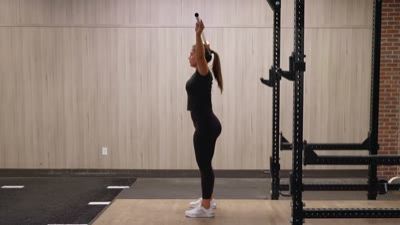
The PVC Overhead Squat Hold is a functional mobility exercise that challenges full-body stability by maintaining a deep squat position with arms locked overhead. It primarily targets the legs and core while serving as an excellent diagnostic tool for shoulder and thoracic spine mobility.
Iridium tracks duration and RPE to measure progressive overload on this isometric drill, focusing on stability endurance rather than maximum strength. Because the overhead position requires fresh stabilizers, the system checks per-muscle recovery status for both your shoulders and legs to avoid programming this movement when you are fatigued from recent sessions. Iridium counts this toward your overall training volume but ensures it does not interfere with the Maximum Recoverable Volume of your primary muscle groups.
Form Cues
- Push the PVC pipe upward constantly
- Keep your chest tall and open
- Drive your knees outward over your toes
- Keep your weight balanced over your mid-foot
- Engage your core to prevent arching
- Don't let your elbows bend
- Don't allow your chest to fall forward
- Don't let your heels lift off the floor
- Don't let your knees cave inward
- Don't hyperextend your lower back
Common Mistakes
- Excessive forward lean of the torso
- Bending the elbows to compensate
- Heels rising off the ground
- Rounding the lower back (butt wink)
- Looking down at the floor
Muscles Worked
This exercise isometrically engages the quadriceps and glutes to maintain the deep squat position, building endurance in the lower body. Simultaneously, it heavily recruits the anterior deltoids, upper back, and core musculature to stabilize the spine and keep the PVC pipe locked out overhead against gravity.
Primary
Secondary

Get Personalized Coaching for PVC Overhead Squat Hold
Don't guess your way through weights or workouts. Download Iridium for automatic, AI-powered coaching that adapts to your recovery and goals.