PVC Overhead Squat
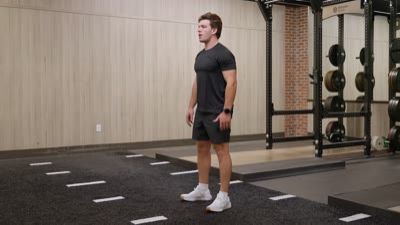
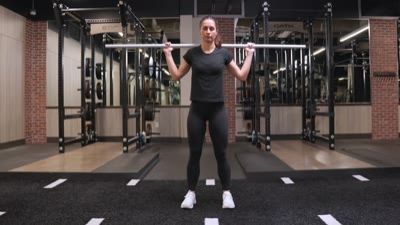
The PVC Overhead Squat is a fundamental mobility exercise used to assess and improve total body flexibility, specifically targeting the hips, ankles, and thoracic spine. It reinforces proper squat mechanics and overhead stability using a lightweight PVC pipe before progressing to weighted variations.

Iridium treats this movement as a technical mobility drill, meaning it does not count toward your Minimum Effective Volume or hypertrophy tracking for the legs and shoulders. The AI typically schedules this within dynamic warmup sequences to reinforce overhead mechanics without contributing to your accumulated fatigue score.
Form Cues
- Lock your elbows completely and actively push up against the pipe
- Keep your chest tall and armpits facing forward
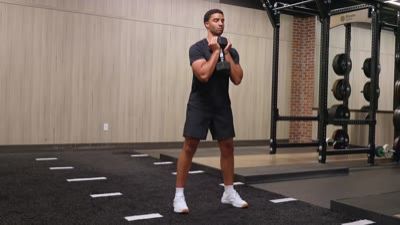
- Drive your knees out over your toes as you descend
- Maintain a neutral spine with your core braced
- Keep your weight balanced over your midfoot
- Don't let your elbows bend or the bar drift forward
- Don't allow your heels to lift off the ground
- Don't let your knees collapse inward
- Don't round your lower back at the bottom of the squat
- Don't look down at the floor
Common Mistakes
- Bar drifting forward of the toes
- Bending elbows due to lack of shoulder mobility
- Excessive forward torso lean
- Heels rising off the floor
- Lumbar hyperextension (arching lower back)
Muscles Worked
This exercise primarily targets the quadriceps and glutes to perform the squatting action. Uniquely, it heavily engages the upper back stabilizers, posterior deltoids, and core musculature isometrically to maintain the upright torso position and keep the bar locked out overhead.
Primary
Secondary
Get Personalized Coaching for PVC Overhead Squat
Don't guess your way through weights or workouts. Download Iridium for automatic, AI-powered coaching that adapts to your recovery and goals.