The Complete Guide to Deload Weeks: When, Why, and How to Program Them
Learn when to take a deload week, how to structure it for maximum recovery, and how tracking tools can tell you exactly when you need one. Evidence-based strategies for intermediate and advanced lifters.
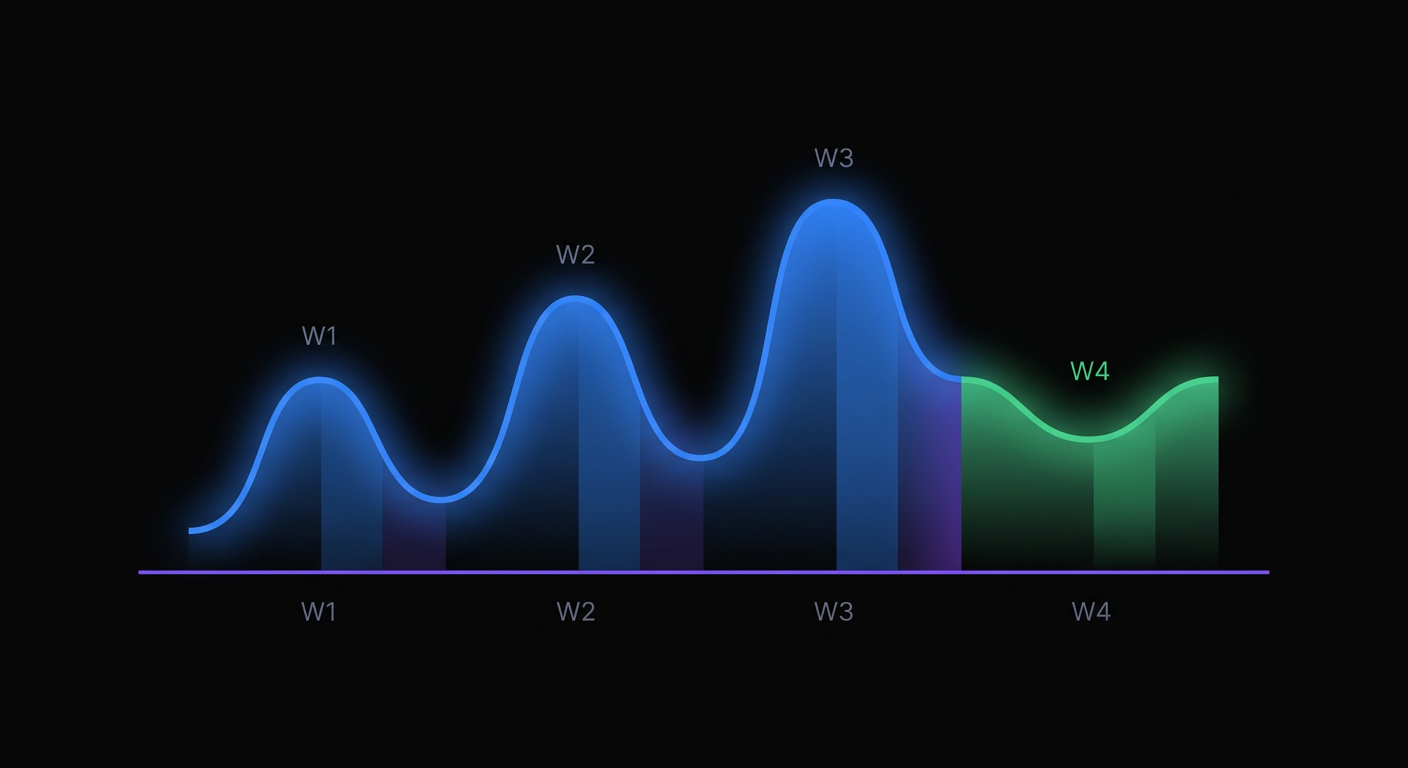
You've been training hard for five weeks. Weights that used to feel crisp now feel sluggish. Your warm-up sets feel like working sets. Sleep is fine, nutrition is fine, but everything in the gym just feels... heavy.
You don't need a new program. You need a deload.
Deload weeks are one of the most misunderstood tools in strength training. Some lifters treat them as sacred, deloading every fourth week like clockwork. Others see them as weakness—an excuse to slack off. Both perspectives miss the point entirely.
A well-timed deload is a strategic decision that lets you train harder, recover better, and progress faster over the long term. Here's how to get them right.
What Is a Deload?
A deload is a planned period of reduced training stress—typically one week—designed to allow accumulated fatigue to dissipate while maintaining the fitness you've built.
The key word is accumulated. Individual workouts create acute fatigue that resolves in a few days. But when you're training hard week after week, fatigue builds up systemically in ways that a rest day or two can't fix. Your joints ache. Your central nervous system is fried. Performance stagnates or declines despite consistent effort.
This concept comes from fitness-fatigue theory (Calvert et al., 1976), which models your observed performance as the difference between fitness and fatigue. Both increase with training, but fatigue accumulates faster and dissipates faster than fitness. A deload strategically lets fatigue drop while fitness stays largely intact—so when you return to full training, you express performance you've already built but couldn't access under fatigue.
That's the core insight: a deload doesn't make you weaker. It reveals the strength you've already built.
Why Deloads Are Non-Negotiable for Serious Lifters
If you're training with any meaningful intensity and volume, fatigue accumulation isn't optional—it's inevitable. The question isn't whether you'll need to manage it, but how.
Fatigue Is Multidimensional
Training fatigue isn't just "my muscles are tired." It operates on several levels:
- Muscular fatigue: Localized damage and metabolic stress in trained tissues
- Neural fatigue: Central nervous system fatigue that reduces motor unit recruitment and coordination
- Joint and connective tissue stress: Tendons, ligaments, and cartilage accumulate stress more slowly than muscles but also recover more slowly
- Psychological fatigue: Mental burnout from sustained high-effort training
A single rest day might resolve muscular fatigue, but neural and connective tissue fatigue can take a week or more to fully clear. This is why lifters who "never take deloads" often deal with chronic joint pain, plateaus, and eventual injury.
The Research Supports Planned Recovery
Research by Fry & Kraemer (1997) in Sports Medicine demonstrated that markers of overtraining—decreased performance, hormonal disruption, mood disturbances—begin appearing after as few as two weeks of training at excessive volumes without recovery periods.
More practically, periodization research consistently shows that programs incorporating planned recovery phases outperform linear programs that attempt to push volume and intensity indefinitely. Rhea & Alderman (2004) found in a meta-analysis that periodized programs produced significantly greater strength gains than non-periodized programs, and a key mechanism is the strategic management of fatigue through recovery periods.
You're not taking a week off because you're soft. You're doing it because the evidence says it works.
When to Take a Deload: The Two Approaches
There are two schools of thought on deload timing, and neither is universally right. The best approach depends on your training age, how well you track your performance, and how well you know your body.
1. Scheduled Deloads (Proactive)
Program a deload every 4-6 weeks regardless of how you feel. This is the conservative, low-risk approach.
Best for:
- Lifters who push hard and tend to ignore fatigue signals
- Anyone running a structured mesocycle with planned volume increases
- Lifters over 35, whose connective tissue recovery is slower
- Anyone with a history of overuse injuries
The typical structure:
- Weeks 1-4: Progressive volume increase (e.g., starting at your MEV and ramping toward MRV)
- Week 5: Deload
- Repeat
The downside? Sometimes you deload when you don't need to, leaving gains on the table. But for most lifters, the cost of an unnecessary deload (one slightly suboptimal week) is far lower than the cost of skipping a needed one (weeks of stagnation, possible injury).
2. Reactive Deloads (Performance-Based)
Deload when your data tells you to, not on a fixed schedule. This requires honest self-assessment and good tracking.
Best for:
- Lifters with several years of experience reading their body
- Anyone with consistent, detailed performance tracking
- Lifters whose recovery capacity varies significantly (due to work stress, sleep patterns, etc.)
Trigger indicators:
- Performance declining across multiple exercises for 2+ sessions
- Recovery metrics consistently trending down
- Motivation and gym enjoyment noticeably dropping
- Persistent joint soreness that doesn't resolve with normal rest
- Needing significantly more warm-up sets to feel ready
The advantage of reactive deloads is efficiency—you only deload when you actually need to. Some training blocks, you might go 6-7 weeks before needing one. Others, fatigue might accumulate faster and you'll deload at week 3.
The risk? Most lifters are terrible at recognizing when they need a deload because ego gets in the way. "I just need to push through" is the rallying cry of lifters two weeks away from a tweaked back.
The Hybrid Approach
Plan deloads every 4-6 weeks, but let performance data move them earlier if needed. This gives you a hard backstop while still allowing responsiveness to your actual fatigue levels.
Iridium is built for exactly this approach. The app tracks your performance across exercises, monitors your weekly training volume by muscle group, and integrates recovery data from Apple Health—including HRV, resting heart rate, and sleep quality. When your readiness score trends downward and performance metrics start dropping, that's your signal. You don't have to guess whether it's an off day or accumulated fatigue. The data tells you.
How to Structure a Deload Week
Not all deloads are created equal. The way you reduce training stress matters.
What to Reduce
You have three primary levers: volume, intensity (weight on the bar), and effort (proximity to failure). Most effective deloads manipulate volume and effort while keeping intensity moderate.
The Volume Reduction Deload (Recommended for most lifters)
- Reduce total sets per muscle group by 40-60%
- Keep weights at 70-85% of recent working weights
- Stop all sets 3-4 reps short of failure
- Maintain normal training frequency
If you've been doing 16 hard sets of chest per week, drop to 6-8 sets. Use similar weights but do fewer sets, and none of them should feel truly difficult. You're stimulating the muscle enough to prevent detraining while giving your body a genuine recovery window.
The Intensity Reduction Deload
- Maintain normal volume (set count)
- Reduce weights by 40-50%
- Focus on technique and mind-muscle connection
This works but is less common because the high set count, even at reduced weight, still creates some systemic fatigue. It's better suited for technique-focused deloads where you want to refine movement patterns.
The Frequency Reduction Deload
- Reduce training days from, say, 5 to 3
- Moderate reduction in volume and intensity
- Good for psychological recovery
This is the simplest approach: just train less often. It works, but you lose some of the "greasing the groove" benefit of maintaining frequency.
What NOT to Do During a Deload
Don't skip it entirely. A full week off is rarely necessary and can actually cause more stiffness, soreness, and detraining than a properly structured deload. Light training maintains neuromuscular patterns and prevents the "first day back" feeling.
Don't turn it into a PR attempt. "I feel so fresh on day 3 of my deload, let me max out!" No. The freshness you feel mid-deload is your body recovering. Let it finish the process.
Don't add cardio or other training to "fill the gap." If you normally don't do much conditioning work, adding three HIIT sessions during your deload defeats the purpose. Keep your total training stress low across all modalities.
Don't deload for two weeks. For most lifters, one week is sufficient. Extended deloads risk detraining without additional recovery benefit. Research on detraining timelines (Mujika & Padilla, 2000) suggests that strength can be maintained for up to 3 weeks of reduced training, but there's no reason to push it. One week gets the job done.
How Iridium Helps You Nail Your Deload Timing
This is where data-driven training separates itself from guesswork. The signals that indicate you need a deload are often subtle—and by the time they're obvious, you've probably needed one for a week already.
Iridium's Recovery & Readiness system synthesizes multiple data streams into an actionable readiness score:
- Training load monitoring tracks your recent training stress relative to your established patterns, flagging when volume or intensity significantly outpaces what you've been recovering from. This early warning helps you catch fatigue accumulation before it impacts performance.
- Per-muscle-group recovery status shows which muscles are fully recovered and which are still accumulating fatigue from recent sessions. When multiple muscle groups show persistently low recovery, systemic fatigue is building.
- HRV and resting heart rate trends from Apple Health provide objective recovery data. Declining HRV or elevated RHR across several days—independent of a single bad night's sleep—suggests your autonomic nervous system is struggling to keep up with training demands.
- Performance tracking across exercises highlights when you're consistently underperforming your recent baselines. One bad session is noise. Three in a row is a signal.
Instead of relying on feel or a rigid calendar, you get an objective picture of your recovery status. When readiness scores trend below 50 and performance metrics are declining, that's your deload trigger—backed by data, not ego.
Deloads Within Volume Periodization
If you're programming with volume landmarks in mind, deloads aren't separate from your programming—they're integral to it.
A well-structured mesocycle looks like this:
Week 1: Start at or slightly above MEV. Moderate intensity, focus on technique. Establish baselines.
Week 2-3: Ramp volume toward MAV. Add 1-3 sets per muscle group per week. Push performance.
Week 4-5: Approach or briefly touch MRV. High volume, high effort. Fatigue is accumulating intentionally.
Week 6 (Deload): Drop volume to maintenance volume (MV). Reduce effort. Let fatigue dissipate.
Week 7: Begin next mesocycle at MEV with accumulated fitness from the previous block. You should be stronger than when you started the last block.
This is the mesocycle structure that most evidence-based coaches use, and it works because it respects the biological reality of the stimulus-fatigue-recovery-adaptation cycle. The deload isn't wasted time—it's where supercompensation happens.
Tracking your volume across this entire arc matters. If you're not measuring your sets per muscle group week to week, you can't know whether you're actually ramping toward MRV or if you've been accidentally sitting at the same volume for three weeks. Iridium tracks this automatically, showing you exactly where you stand relative to your volume targets throughout a training block.
Signs You've Been Skipping Deloads Too Long
If any of these sound familiar, you're probably overdue:
- Chronic joint pain that you've accepted as "normal." Achy knees, shoulders, or elbows that never fully resolve aren't badges of honor—they're signs of accumulated connective tissue stress.
- Plateaued for 4+ weeks despite training consistently. You might actually be fitter than your performance shows, but fatigue is masking it.
- Sleep quality declining despite no lifestyle changes. Sympathetic nervous system overdrive from excessive training stress can disrupt sleep architecture.
- Dreading the gym when you normally enjoy training. Psychological fatigue is real and it compounds physical fatigue.
- Getting sick more often. Overtraining suppresses immune function. If you're catching every cold that goes around, your body is telling you something.
These aren't signs of weakness. They're signs that your training has outpaced your recovery, and a deload—possibly followed by a reassessment of your overall volume—is the fix.
Common Deload Mistakes
"I'll just take a week off instead." Complete rest is rarely better than active recovery. A structured deload maintains movement patterns, keeps joints lubricated, and provides enough stimulus to prevent the detraining response. Total rest often leads to more stiffness and a rougher return to training.
Deloading only intensity but not volume. Doing 20 light sets is still 20 sets of systemic stress. The primary driver of fatigue accumulation is volume, so cutting sets is more important than cutting weight for recovery purposes.
Deloading too often. If you're deloading every 2-3 weeks, your training stimulus during non-deload weeks probably isn't high enough to necessitate it. Either push harder during training weeks or extend your mesocycles.
Using the deload week to "catch up" on other physical activities. Playing three hours of pickup basketball and going on a long hike during your deload week isn't recovery. Total physical stress needs to decrease, not just gym stress.
The Bottom Line
Deloads aren't a break from progress—they're part of the process that makes progress sustainable. The lifters who train for decades without serious injury or burnout aren't the ones who never take their foot off the gas. They're the ones who know when to ease back so they can push harder in the weeks that follow.
The hard part isn't the deload itself. It's knowing when you need one. And that comes down to tracking: your volume, your performance, your recovery. Without data, you're relying on feel—and feel is unreliable when you're deep in accumulated fatigue.
Ready to stop guessing when to deload? Download Iridium and get recovery tracking that tells you exactly when fatigue is building, when performance is slipping, and when it's time to back off. Train hard when you should, recover when you need to, and make progress that actually lasts.
Related Posts
Recovery Tracking: Why It Matters for Muscle Growth
Learn why tracking recovery matters as much as tracking workouts. HRV, sleep, muscle soreness — the key metrics that drive gains and prevent burnout.
Training Through Soreness: Safe or Not?
Learn when it's safe to train through muscle soreness and when to rest. Evidence-based DOMS guidelines, injury warning signs, and proven recovery strategies.
Active Recovery: What Actually Works
Separate recovery fact from fiction. Evidence-based guide to what actually helps muscle recovery — walking, foam rolling, cold exposure, heat, and sleep — and what's just marketing hype.