Evidence-Based Supplements That Actually Work
Cut through the hype. A science-backed ranking of workout supplements by evidence strength, plus what to skip and how to evaluate claims.
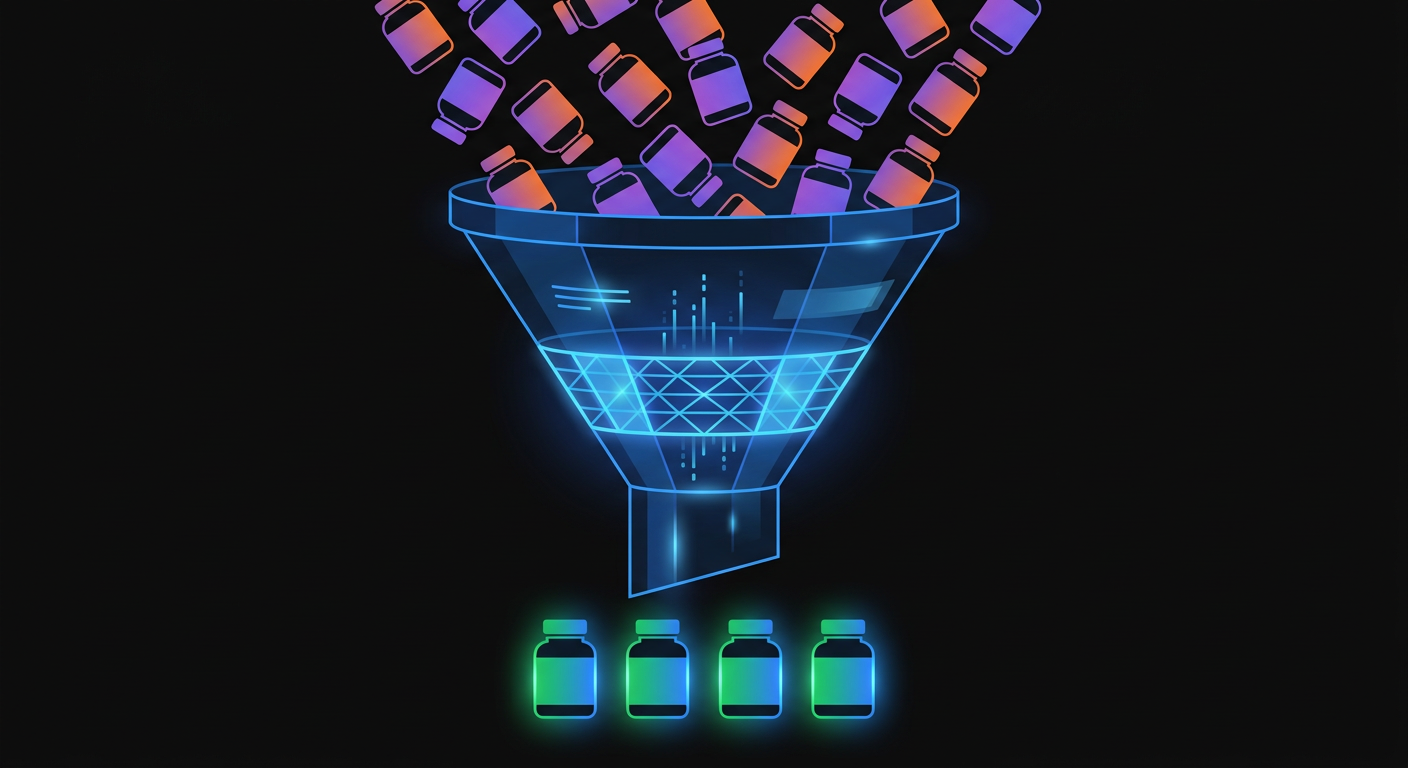
The supplement industry is worth over $50 billion — and most of that money is wasted. The majority of supplements on the market have weak evidence, exaggerated claims, or solve problems that don't exist.
But a few actually work. And the ones that do are backed by decades of research, hundreds of studies, and clear, repeatable results. This guide ranks the most common workout supplements by the strength of their evidence, tells you exactly what's worth your money, and helps you evaluate new claims.
How to Evaluate Any Supplement
Before diving into specific supplements, here's a framework for evaluating any claim you encounter:
- Check the study type — Meta-analyses and systematic reviews > RCTs > observational studies > animal studies > testimonials
- Look at the subjects — Studies on trained lifters matter more to you than studies on elderly or untrained populations
- Check the dose — Many studies use doses far higher or lower than what's in commercial products
- Look for replication — One study means little. Dozens of studies showing the same thing is meaningful
- Follow the money — Who funded the research? Supplement-company-funded studies aren't automatically bad, but they warrant more scrutiny
If a supplement's marketing relies on phrases like "clinically proven" without linking to actual research, or cites a single study as definitive proof — be skeptical. Real evidence doesn't need hype.
Tier 1: Strong Evidence — Take These
These supplements have robust research support, clear mechanisms, and meaningful real-world effects.
Creatine Monohydrate
The most researched supplement in sports nutrition. Full stop.
The International Society of Sports Nutrition position stand on creatine reviewed hundreds of studies and concluded that creatine monohydrate is the most effective nutritional supplement for increasing high-intensity exercise capacity and lean body mass (Kreider et al., 2017). Long-term supplementation (up to 30 g/day for 5 years) has been studied and shown to be safe.
What it does:
- Increases phosphocreatine stores in muscle, improving performance on short, intense efforts (1–10 rep sets)
- Enhances recovery between sets
- May increase total training volume over time, driving greater muscle growth
- Has cognitive benefits, particularly under stress or sleep deprivation
How to take it:
- Dose: 3–5g of creatine monohydrate daily. Every day — not just training days.
- Loading phase optional: 20g/day for 5–7 days saturates stores faster, but 3–5g daily reaches the same levels in about 3–4 weeks.
- Timing: Doesn't matter much. Take it whenever it's convenient.
- Form: Creatine monohydrate is the gold standard. Skip the fancy forms (HCl, buffered, ethyl ester) — they're not better, just more expensive.
Track your creatine as a daily supplement in Iridium's nutrition tracker. Log it as part of your post-workout shake or morning routine so it becomes a habit, not something you forget on rest days.
Protein Powder
Not technically a "supplement" — it's food. But it earns a spot here because of how many lifters rely on it to hit daily protein targets.
A systematic review and meta-analysis of 49 studies found that protein supplementation significantly augments resistance training–induced gains in muscle mass and strength, particularly when total daily protein intake exceeds 1.6 g/kg/day (Morton et al., 2018). The effect was consistent across age groups and training experience levels.
What to know:
- Whey protein is the most studied and has a high leucine content, which drives muscle protein synthesis
- Casein digests slower — useful before bed or between meals
- Plant blends (pea + rice) are comparable to whey for muscle building when matched for leucine content
- The type matters far less than the total. Getting enough daily protein is what counts.
When it's useful:
- You can't hit your protein target through whole food alone
- You need a convenient post-workout option
- You're cutting and need high-protein, low-calorie foods
If you're already hitting your protein goals through whole food, adding protein powder won't provide additional benefit. It's a convenience tool, not a magic one.
Caffeine
The most widely used performance enhancer in the world — and for good reason. The ISSN position stand on caffeine confirms its ergogenic effects across multiple domains of exercise performance (Guest et al., 2021).
What it does:
- Improves muscular endurance, movement velocity, and muscular strength
- Enhances aerobic and anaerobic performance
- Reduces perceived exertion — the same workout feels easier
- Improves focus and reaction time
How to take it:
- Effective dose: 3–6 mg/kg of bodyweight, 30–60 minutes before training
- For a 180 lb (~82 kg) person, that's roughly 250–490 mg
- Start at the low end if you're caffeine-sensitive
- Cycling off periodically (1–2 weeks every few months) can help maintain sensitivity
| Bodyweight | Low Dose (3 mg/kg) | Moderate (4.5 mg/kg) | High Dose (6 mg/kg) |
|---|---|---|---|
| 150 lbs (68 kg) | 204 mg | 306 mg | 408 mg |
| 180 lbs (82 kg) | 246 mg | 369 mg | 492 mg |
| 200 lbs (91 kg) | 273 mg | 410 mg | 546 mg |
Caffeine's performance benefits come from the caffeine itself, not from the specific pre-workout product. If you already drink coffee pre-workout, you're already getting the primary benefit that most pre-workout formulas offer.
Tier 2: Moderate Evidence — Situationally Useful
These have research support but with smaller effect sizes or more specific applications.
Beta-Alanine
Beta-alanine increases muscle carnosine, which buffers hydrogen ions during high-intensity exercise. The ISSN position stand confirms that supplementing with 4–6g/day for at least 2–4 weeks improves exercise performance, particularly in efforts lasting 1–4 minutes (Trexler et al., 2015).
Best for: Higher-rep sets (10–20 reps), circuit training, conditioning work, and metabolic-style training. Less impactful for heavy, low-rep strength work where the phosphocreatine system dominates.
The tingling is harmless. Paresthesia (that skin-tingling sensation) is the most common side effect and is not dangerous. Split your dose across the day if it bothers you.
Vitamin D
Not a "workout supplement" in the traditional sense, but worth including because deficiency is extremely common (especially in northern climates) and impacts training performance, recovery, and even testosterone levels.
Who needs it: If you spend most of your time indoors, live above the 37th parallel, or have dark skin, you're likely low. Get tested before supplementing — this is one where dosing should be based on your actual levels.
Typical dose: 1,000–5,000 IU daily depending on your blood levels.
Omega-3 Fatty Acids (Fish Oil)
Anti-inflammatory effects may support recovery between training sessions. The evidence for direct performance enhancement is weak, but the health benefits — cardiovascular, cognitive, joint — are well-established.
Dose: 2–3g combined EPA/DHA daily from a quality fish oil source.
Tier 3: Weak or Overhyped — Probably Skip These
These either lack sufficient evidence, have tiny effect sizes, or are only useful in narrow circumstances that likely don't apply to you.
BCAAs (Branched-Chain Amino Acids)
BCAAs were once the poster child of intra-workout supplementation. The theory was sound — leucine, isoleucine, and valine are key amino acids for muscle protein synthesis. The problem? If you eat enough total protein (which you should be), BCAAs provide no additional benefit. You're already getting plenty of BCAAs from your food and whey protein.
Skip if: You eat 1.6+ g/kg protein daily. Your money is better spent on food.
Maybe useful if: You train fasted and can't consume a meal beforehand. Even then, a small amount of whey protein is more effective.
Testosterone Boosters
The "natural test booster" category is largely a graveyard of overpromised ingredients. Most popular ingredients (tribulus terrestris, D-aspartic acid, fenugreek) show either no meaningful effect on testosterone in healthy young men, or transient bumps that don't translate to muscle growth.
If your testosterone is clinically low, see a doctor. If it's normal, these won't push it high enough to matter.
Fat Burners / Thermogenics
Most fat burners are just caffeine in an expensive package, sometimes with added ingredients that have marginal-to-zero evidence. The ones that do work (ephedrine, DNP) carry serious health risks and aren't worth it.
The most effective "fat burner" is a caloric deficit, adequate protein, and heavy training. Save your money.
Glutamine
Often marketed for recovery and immune support. While glutamine plays important roles in the body, supplementation doesn't appear to enhance muscle recovery or growth in healthy, well-fed individuals. Your body produces enough, and dietary protein provides more.
How to Build a Sensible Supplement Stack
Based on the evidence above, here's what's actually worth taking:
| Supplement | Evidence | Monthly Cost | Priority |
|---|---|---|---|
| Creatine monohydrate | Very strong | $10–15 | Essential |
| Protein powder | Strong | $30–50 | High (if needed for targets) |
| Caffeine (pre-workout) | Strong | $5–15 | High (if you respond well) |
| Vitamin D | Moderate | $5–10 | Moderate (get tested first) |
| Beta-alanine | Moderate | $15–20 | Low-Moderate |
| Fish oil | Moderate (health) | $15–25 | Low-Moderate |
That's roughly $65–135/month for every supplement worth taking. Compare that to the $200+ some people spend on proprietary blends and test boosters that do nothing.
Log your pre-workout caffeine and supplements in Iridium's nutrition tracker before you train. Over time, you can cross-reference your training performance — check whether days with pre-workout caffeine correlate with better session quality using your workout history and RPE trends.
The Hierarchy of What Actually Matters
Before spending a dollar on supplements, make sure the fundamentals are dialed in. No supplement can compensate for poor execution on the basics:
- Training — Progressive overload, appropriate volume, and consistency
- Nutrition — Sufficient calories and protein for your goal
- Sleep — 7–9 hours per night
- Recovery — Managing fatigue and scheduling deloads when needed
- Supplements — The cherry on top, not the cake
If your training and nutrition aren't locked in, creatine won't save you. If they are, creatine will give you a small but meaningful edge over time. That's how supplements work — they supplement a solid foundation.
The Bottom Line
The supplement industry thrives on making simple things complicated. In reality, most lifters need three things at most: creatine, protein powder (if diet alone falls short), and caffeine before hard sessions.
Everything else is either situationally useful (beta-alanine, vitamin D, fish oil) or a waste of money (BCAAs, test boosters, fat burners). Don't let marketing convince you that the 1% matters more than the 99%.
Spend your money on good food, a solid training plan, and the three supplements that actually have evidence behind them. That's it.
Track your nutrition, training, and supplements in one place. Iridium makes it easy to log everything — from daily macros to pre-workout caffeine — so you can see the full picture of what's actually driving your progress.
Related Posts
Caffeine and Workout Performance: The Evidence-Based Guide
How caffeine improves strength, endurance, and focus. Optimal dosage, timing, tolerance management, and how to use caffeine before your workout.
Cold Exposure for Recovery: What the Science Actually Says
Ice baths, cold showers, and cryotherapy for muscle recovery — what works, what doesn't, and how to use cold exposure without killing your gains.
Fasted Training: Pros, Cons, and Who It's For
Should you work out on an empty stomach? We break down the science of fasted training, its effects on fat loss and muscle, and practical tips.