Dumbbell Bent Over Reverse Fly
The Dumbbell Bent Over Reverse Fly is an isolation exercise designed to target the posterior deltoids and upper back muscles. By hinging at the hips and lifting weights laterally, this movement helps improve posture, shoulder health, and upper back stability.

Iridium tracks this exercise as direct posterior deltoid volume while accounting for the isometric fatigue the bent-over position places on your lower back. By analyzing your 7-day workout history and per-muscle recovery status, the system determines if your erector spinae can support the movement's posture requirements. If local fatigue prevents strict execution, Iridium substitutes a chest-supported variation to ensure the target muscles remain the limiting factor.
Form Cues
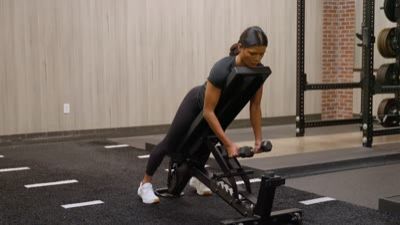
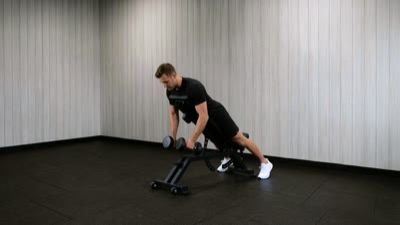
- Hinge at your hips until your torso is nearly parallel to the floor.
- Maintain a neutral spine with a slight bend in your knees throughout the set.
- Lead the lift with your pinky fingers and elbows to better isolate the rear delts.
- Squeeze your shoulder blades together briefly at the top of the movement.
- Lower the weights slowly and with control to resist gravity.
- Don't swing your torso or use momentum to jerk the weights up.
- Don't let your chest rise excessively during the lift.
- Don't lock your elbows completely; keep a soft bend to protect the joint.
- Don't shrug your shoulders up toward your ears as you lift.
Common Mistakes
- Standing too upright which shifts focus to side delts
- Using weights that are too heavy to control
- Bending elbows too much, turning the fly into a row
- Rounding the lower back due to poor core engagement
- Rushing the eccentric (lowering) phase
Muscles Worked
This exercise primarily isolates the posterior deltoids, rhomboids, and middle trapezius, which are crucial for pulling the shoulders back and counteracting slouching. Secondary engagement occurs in the erector spinae to maintain the bent-over position, while the forearms and grip strength are utilized to hold the dumbbells.
Primary
Secondary

Get Personalized Coaching for Dumbbell Bent Over Reverse Fly
Don't guess your way through weights or workouts. Download Iridium for automatic, AI-powered coaching that adapts to your recovery and goals.