High Butt Bear Crawl
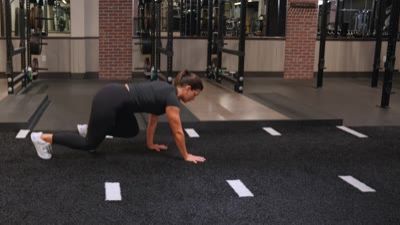
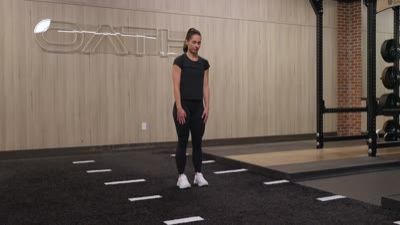
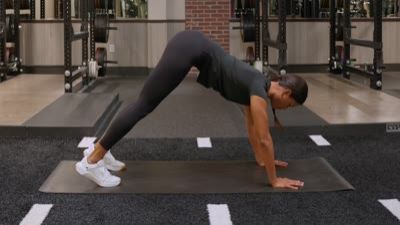
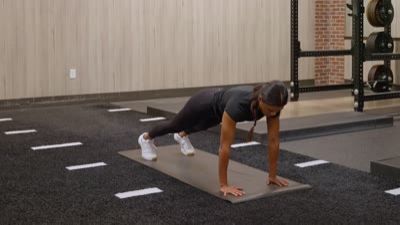
The High Butt Bear Crawl is a dynamic bodyweight exercise that involves crawling on all fours with hips piked high, resembling a moving downward dog. This movement builds shoulder stability and core strength while actively stretching the hamstrings and calves.

Iridium uses RPE data rather than 1RM estimations to gauge intensity on this time-based bodyweight movement. To prevent technique breakdown, the system checks the recovery status of your anterior deltoids and core against your 7-day workout history before assigning this stability-focused exercise.
Form Cues
- Lift your hips high toward the ceiling in a pike position
- Keep your legs and arms relatively straight
- Push the floor away actively with your shoulders
- Move your opposite hand and foot forward simultaneously
- Maintain a neutral neck position looking between hands
- Don't let your hips sag toward the floor
- Don't bend your knees excessively like a standard crawl
- Don't crane your neck to look forward
- Don't rush the movement with choppy steps
- Don't allow your lower back to hyper-extend
Common Mistakes
- Bending knees too much
- Moving same-side limbs together
- Shifting weight too far forward
- Holding breath during movement
- Rounding the upper back excessively
Muscles Worked
This exercise primarily targets the anterior deltoids and triceps as they support your body weight in an inverted position, while the core works to stabilize the torso during locomotion. It uniquely engages the posterior chain, providing a dynamic stretch and load to the hamstrings and calves due to the elevated hip position.
Primary
Secondary

Get Personalized Coaching for High Butt Bear Crawl
Don't guess your way through weights or workouts. Download Iridium for automatic, AI-powered coaching that adapts to your recovery and goals.