Medicine Ball Lunge
The Medicine Ball Lunge is a functional full-body exercise that combines a forward lunge with a chest press motion. It primarily targets the quadriceps and glutes while challenging core stability and shoulder strength through the extended lever arm of the ball.
Iridium analyzes your 7-day workout history to ensure your glutes and quads have sufficient recovery capacity for this stability-focused movement. Since holding the medicine ball engages the core and anterior delts, the system factors in secondary muscle fatigue to determine if this variation fits your current readiness. Progressive overload is driven by your RPE scores, prompting increases in ball weight or repetition volume only when your exertion trends confirm you are ready.
Form Cues
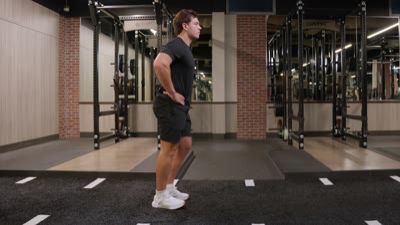
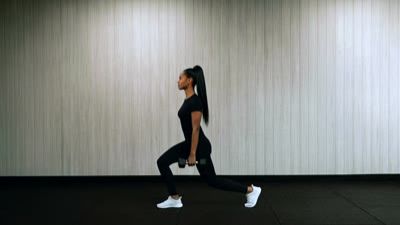
- Step forward and lower your hips until both knees bend to 90 degrees
- Press the ball straight out from your chest as you descend
- Keep your torso upright and core braced tight
- Drive firmly through your front heel to return to the start
- Retract the ball to your chest simultaneously as you stand back up
- Don't let your front knee collapse inward
- Don't round your shoulders or lean forward at the waist
- Don't slam your back knee into the ground
- Don't extend the ball before you begin the step
Common Mistakes
- Knee valgus (caving inward)
- Leaning the torso too far forward
- Inconsistent step length
- Lack of core engagement
- Rushing the movement and losing balance
Muscles Worked
This exercise is a potent lower-body builder, focusing heavily on the quadriceps and glutes for the lunge portion, with the hamstrings acting as stabilizers. The addition of the medicine ball press specifically targets the anterior deltoids and pectorals while forcing the deep core muscles to work overtime to maintain an upright posture against the forward weight.
Primary
Secondary



Get Personalized Coaching for Medicine Ball Lunge
Don't guess your way through weights or workouts. Download Iridium for automatic, AI-powered coaching that adapts to your recovery and goals.