Dumbbell Side Bend
The dumbbell side bend is a standing isolation exercise that strengthens the obliques and improves lateral spinal mobility. By holding a weight in one hand and bending sideways, you target the waistline and deep core stabilizers.

Iridium tracks the secondary load this exercise places on your erector spinae to ensure it doesn't conflict with recovery from recent squats or deadlifts. The AI analyzes your 7-day history and sub-muscle fatigue status to verify your lower back is ready for the lateral stress before programming it. Progression is managed through RPE to ensure the intensity remains effective without pushing your stabilizers past their recovery limit.
Form Cues
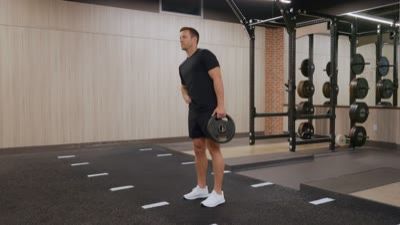
- Hold the dumbbell in one hand only
- Keep your chest up and shoulders square forward
- Slide the weight slowly down your outer thigh
- Engage your glutes to maintain a neutral spine
- Squeeze the opposite obliques to pull yourself upright
- Don't hold dumbbells in both hands at the same time
- Don't lean forward or backward at the waist
- Don't jerk the weight upward using momentum
- Don't bend past your comfortable range of motion
Common Mistakes
- Holding weights in both hands (counterbalancing)
- Leaning forward or twisting the torso
- Using excessive momentum to return upright
- Hyperextending the range of motion
Muscles Worked
This exercise primarily targets the internal and external obliques, which are responsible for lateral flexion and spinal stability. It also engages the quadratus lumborum (QL) and the erector spinae to control the descent and stabilize the spine.
Primary
Secondary
Get Personalized Coaching for Dumbbell Side Bend
Don't guess your way through weights or workouts. Download Iridium for automatic, AI-powered coaching that adapts to your recovery and goals.