Exercise Ball Pull In
The Exercise Ball Pull In is a dynamic core exercise that challenges balance and stability by requiring you to tuck your knees into your chest while maintaining a plank position on a stability ball. This movement targets the lower abs and deep core stabilizers while improving shoulder strength and coordination.

Since this movement utilizes a static plank hold, it generates significant fatigue in the anterior deltoids alongside the lower abs. Iridium checks the recovery status of your shoulders based on recent training volume to ensure they can support the movement without limiting your core work. The AI also tracks your repetition performance relative to your current body weight to accurately gauge progressive overload.
Form Cues
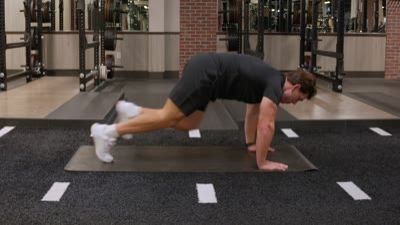
- Start in a high plank with your shins resting on the center of the ball
- Press your hands firmly into the floor to keep shoulders active
- Exhale as you tuck your knees toward your chest using your lower abs
- Allow your hips to lift slightly as your knees come in
- Extend your legs back slowly to the starting position
- Don't let your lower back sag or hyperextend at the bottom
- Don't use momentum to jerk the ball forward
- Don't let your shoulders shrug up toward your ears
- Don't drop your head; keep your neck neutral
Common Mistakes
- Sagging hips (lumbar extension)
- Rushing the extension phase
- Rounding the upper back excessively
- Placing hands too far forward
- Resting on toes instead of shins
Muscles Worked
This exercise primarily targets the rectus abdominis, specifically the lower region, and the hip flexors as they work to pull the knees toward the chest against instability. It also heavily engages the anterior deltoids, triceps, and serratus anterior to maintain a rigid plank position, while the transverse abdominis acts to stabilize the spine throughout the dynamic movement.
Primary
Secondary


Get Personalized Coaching for Exercise Ball Pull In
Don't guess your way through weights or workouts. Download Iridium for automatic, AI-powered coaching that adapts to your recovery and goals.