Plank Jack
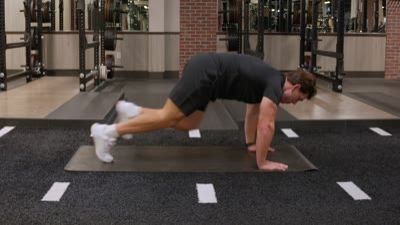
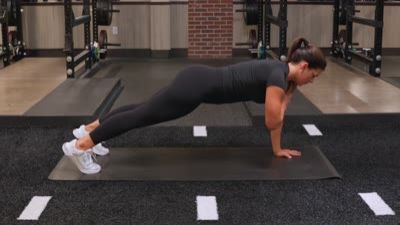
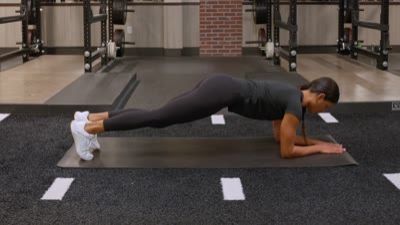
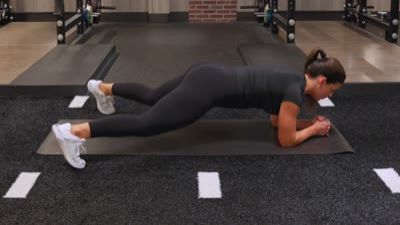
A high-intensity core exercise that combines a static plank hold with the dynamic leg movement of a jumping jack. This movement elevates your heart rate for cardiovascular conditioning while demanding significant core stability and shoulder strength.

Since Plank Jacks demand significant isometric shoulder strength, Iridium analyzes your 7-day training history to ensure your anterior deltoids have sufficient recovery status to maintain the hold. The system tracks your performance relative to body weight and uses RPE data to determine when to increase volume for progressive overload.
Form Cues
- Start in a high plank position with wrists directly under shoulders
- Brace your core tightly to keep your hips level
- Jump both feet out and in lightly, landing on the balls of your feet
- Maintain a straight line from your head to your heels throughout
- Breathe rhythmically with the movement
- Don't let your hips sag toward the floor
- Don't pike your hips high into the air
- Don't bounce your upper body excessively
- Don't drop your head or look back at your feet
Common Mistakes
- Sagging hips (lumbar extension)
- Piking hips up excessively
- Heavy landing on feet
- Shoulders drifting behind wrists
- Holding breath
Muscles Worked
This exercise primarily targets the core stabilizers, including the rectus abdominis and obliques, which must work overtime to prevent the spine from moving during the leg jumps. It also heavily utilizes the anterior deltoids and triceps for upper body stability, while the hip abductors and flexors drive the dynamic lower body movement.
Primary
Secondary
Get Personalized Coaching for Plank Jack
Don't guess your way through weights or workouts. Download Iridium for automatic, AI-powered coaching that adapts to your recovery and goals.