Reverse Crunch
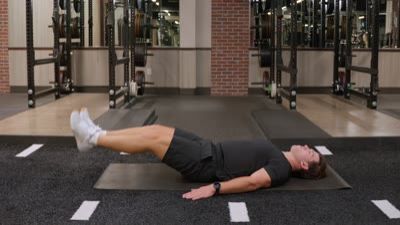
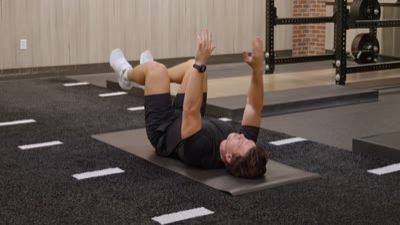
The Reverse Crunch is a foundational core exercise that targets the lower abdominals by lifting the hips off the floor through pelvic tilting. It effectively strengthens the rectus abdominis while minimizing strain on the neck and upper back often caused by traditional crunches.

Iridium monitors fatigue in the lower abdominals separately from the upper abs, using your 7-day workout history to schedule this exercise when that specific sub-group is recovered. The system also checks hip flexor fatigue to ensure they won't take over the movement, while tracking your progression based on bodyweight-relative performance and RPE scores.
Form Cues
- Press your lower back firmly into the floor
- Tilt your pelvis upward toward your ribcage
- Exhale deeply as you lift your hips
- Lower your hips slowly and with control
- Keep your palms pressed down for stability
- Don't swing your legs to create momentum
- Don't arch your lower back at the bottom of the rep
- Don't lift your head or neck off the floor
- Don't let your feet touch the floor between reps
Common Mistakes
- Using momentum to initiate the lift
- Arching the lower back during the descent
- Rushing the eccentric (lowering) phase
- Pulling with the neck instead of the abs
- Relying entirely on hip flexors
Muscles Worked
This exercise isolates the lower portion of the rectus abdominis by utilizing a posterior pelvic tilt to lift the hips. While the hip flexors assist in the movement, proper form ensures the tension remains on the abdominals, with the obliques acting as stabilizers throughout the range of motion.
Primary
Secondary


Get Personalized Coaching for Reverse Crunch
Don't guess your way through weights or workouts. Download Iridium for automatic, AI-powered coaching that adapts to your recovery and goals.