Stability Ball Hip Bridge
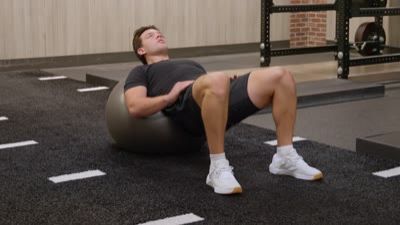
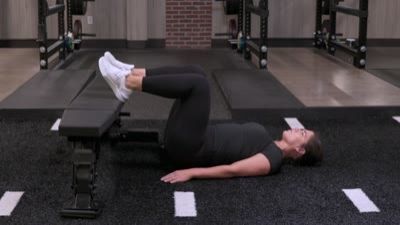
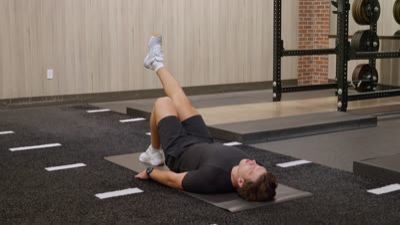
The stability ball hip bridge is a lower-body exercise that strengthens the glutes and hamstrings while challenging core stability. By placing your feet on an unstable surface, it forces your stabilizer muscles to engage more intensely than a standard floor bridge.

Iridium tracks your performance relative to body weight and uses RPE feedback to drive progressive overload through increased repetition volume rather than external load. Because this movement requires significant control, the AI checks your calculated hamstring recovery status to ensure you aren't too pre-fatigued to maintain stability.
Form Cues
- Drive your heels firmly into the center of the ball
- Squeeze your glutes hard at the top of the movement
- Keep your ribs down and core braced to protect your spine
- Control the lowering phase to prevent the ball from wobbling
- Don't arch your lower back to get your hips higher
- Don't let the ball roll side-to-side
- Don't push excessively into the floor with your arms
- Don't use momentum to swing your hips up
Common Mistakes
- Hyperextending the lumbar spine
- Dominating the movement with hamstrings instead of glutes
- Losing balance due to lack of core tension
- Placing the ball too far away from the body
Muscles Worked
This exercise primarily targets the gluteus maximus and hamstrings, using hip extension to lift the body. The instability of the ball significantly increases activation of the core stabilizers (transverse abdominis) and smaller hip muscles compared to a stable floor bridge.
Primary
Secondary
Get Personalized Coaching for Stability Ball Hip Bridge
Don't guess your way through weights or workouts. Download Iridium for automatic, AI-powered coaching that adapts to your recovery and goals.