Kneeling Squat (Dumbbell)
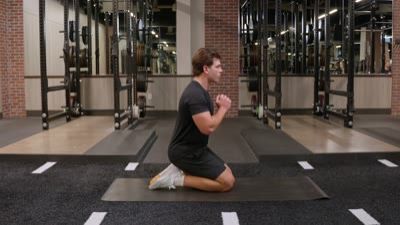
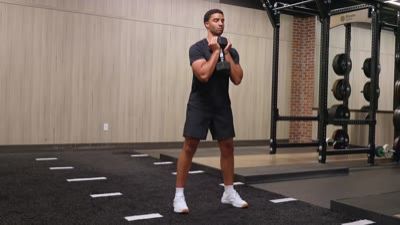
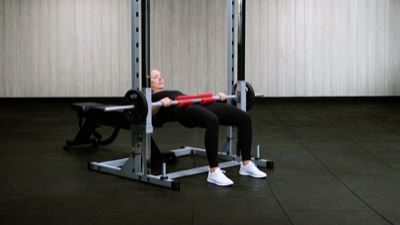
The Kneeling Squat (Dumbbell) is a lower-body strength exercise that targets the glutes and quadriceps by performing a hip extension movement from a kneeling position. This variation isolates the hips while minimizing ankle mobility requirements and reducing lower back strain compared to standing squats.

Iridium classifies this as a glute-dominant accessory used to accumulate Maximum Adaptive Volume without the heavy axial loading of standing squats. If your 7-day history indicates accumulated lower back fatigue, the AI favors this variation to isolate hip extension while preserving systemic recovery. Progressive overload is managed by tracking RPE trends and weight increases to ensure intensity remains sufficient for hypertrophy.
Form Cues
- Kneel on a soft pad with knees hip-width apart
- Keep your torso upright and core braced tight
- Lower your hips back toward your heels under control
- Squeeze your glutes hard to drive your hips forward
- Maintain a neutral spine throughout the movement
- Don't hyperextend your lower back at the top
- Don't let your shoulders round forward
- Don't bounce off your calves at the bottom
- Don't perform this movement on a hard surface
- Don't disengage your core during the descent
Common Mistakes
- Overarching the lower back
- Using momentum to rise
- Insufficient glute squeeze
- Resting completely at the bottom
- Rounding the upper back
Muscles Worked
This exercise primarily targets the glutes and quadriceps, forcing the hips to work through a significant range of motion without the balance demands of standing. The core and spinal erectors work as secondary muscles to maintain an upright posture, while the forearms engage to hold the dumbbells securely.
Primary
Secondary

Get Personalized Coaching for Kneeling Squat (Dumbbell)
Don't guess your way through weights or workouts. Download Iridium for automatic, AI-powered coaching that adapts to your recovery and goals.