Pulse Lunge
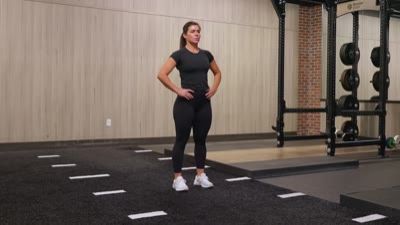
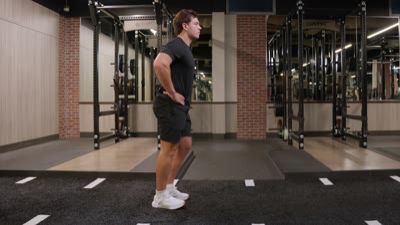
The Pulse Lunge is a stationary lower-body exercise that keeps constant tension on the quadriceps and glutes by using a shortened range of motion at the bottom of a lunge. It builds muscular endurance and stability without requiring heavy weights.

Iridium treats this constant-tension movement as an accessory lift, prioritizing RPE feedback over raw weight trends to determine progressive overload. The algorithm audits your 7-day training history for heavy leg work to ensure this additional volume fits within your calculated recovery capacity for quads and glutes.
Form Cues
- Keep your torso upright and core braced tight
- Drive your weight through the front heel
- Hover your back knee just above the floor
- Pulse up and down only 2-3 inches
- Maintain a hip-width stance for balance
- Don't fully extend your legs at the top
- Don't let your front knee collapse inward
- Don't lean your chest forward over your knee
- Don't bounce the back knee off the floor
- Don't lift your front heel off the ground
Common Mistakes
- Standing up too high between reps
- Step stance is too narrow (tightrope walking)
- Shifting weight to the toes
- Arching the lower back excessively
- Rushing the tempo
Muscles Worked
This exercise primarily targets the quadriceps and glutes by maintaining constant tension (hypoxia) through a restricted range of motion. It also heavily engages the core and stabilizer muscles to maintain the split stance position, while the hamstrings assist in controlling the descent.
Primary
Secondary

Get Personalized Coaching for Pulse Lunge
Don't guess your way through weights or workouts. Download Iridium for automatic, AI-powered coaching that adapts to your recovery and goals.