Static Lunge
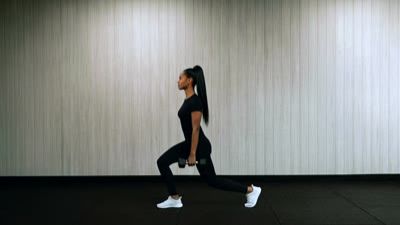
The Static Lunge is a foundational unilateral leg exercise that targets the quadriceps and glutes by having you lower your hips in a fixed split stance. It builds lower body strength and balance without the dynamic impact of walking lunges.

Static Lunges target the quadriceps and glutes with high metabolic demand while minimizing spinal loading. Iridium uses your 7-day workout history to program this movement when your legs require stimulus but your spinal erectors show high fatigue from recent heavy lifts. To prevent burnout, the AI tracks this volume against your Maximum Recoverable Volume to ensure the added intensity fits your recovery capacity.
Form Cues
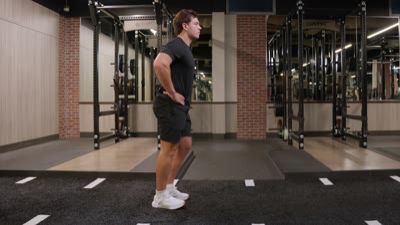
- Stand with feet hip-width apart like you are on train tracks
- Drop your back knee straight down toward the floor
- Keep your front knee aligned with your second toe
- Drive through your front heel to return to the start
- Keep your torso upright and core braced
- Don't let your front knee cave inward
- Don't lift your front heel off the ground
- Don't slam your back knee into the floor
- Don't lean excessively forward at the waist
- Don't stand with feet in a single line (tightrope)
Common Mistakes
- Stance too narrow (tightrope walking)
- Front heel lifting up
- Knee valgus (caving in)
- Inadequate depth
- Torso collapsing forward
Muscles Worked
This exercise primarily targets the quadriceps and glutes, forcing each leg to work independently to correct strength imbalances. The hamstrings act as stabilizers, while the core works constantly to maintain an upright torso and pelvic stability throughout the movement.
Primary
Secondary



Get Personalized Coaching for Static Lunge
Don't guess your way through weights or workouts. Download Iridium for automatic, AI-powered coaching that adapts to your recovery and goals.