Medicine Ball Overhead Lunge
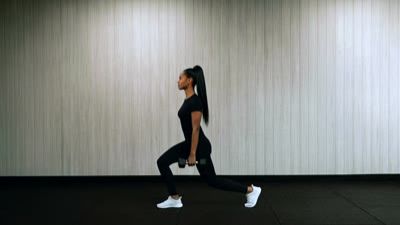
A dynamic compound exercise that involves lunging while holding a medicine ball locked out directly overhead. This movement builds lower body strength in the quads and glutes while simultaneously challenging core stability and shoulder mobility.
Iridium checks your anterior deltoid and core recovery scores before programming this movement to ensure upper body fatigue doesn't cause you to fail before your legs receive adequate stimulus. The algorithm counts the volume toward your quadriceps and glute landmarks while factoring in the higher RPE associated with overhead stability. If your recent workout history includes heavy pressing, Iridium may prioritize a lunge variation with better leverage to maximize leg output.
Form Cues
- Extend your arms fully to lock the ball directly overhead.
- Keep your ribcage pulled down and your core engaged.
- Step forward into a lunge with feet hip-width apart.
- Lower your hips until both knees form 90-degree angles.
- Drive firmly through your front heel to return to standing.
- Don't allow your elbows to bend or flare out excessively.
- Don't arch your lower back to compensate for tight shoulders.
- Don't let your front knee collapse inward past your big toe.
- Don't step on a narrow line like a tightrope.
- Don't let the back knee slam into the floor.
Common Mistakes
- Hyperextending the lower back
- Bending elbows due to fatigue
- Narrow stance causing wobbling
- Leaning the torso forward
- Short-stepping the lunge
Muscles Worked
The primary drivers are the quadriceps and glutes, which power the lunge movement. However, the overhead position forces the anterior deltoids, triceps, and upper back to work isometrically, while the deep core muscles must fire intensely to stabilize the spine against the elevated load.
Primary
Secondary



Get Personalized Coaching for Medicine Ball Overhead Lunge
Don't guess your way through weights or workouts. Download Iridium for automatic, AI-powered coaching that adapts to your recovery and goals.